
Private Label Loofah Packaging and Spec Sheet: What to Ask Your Supplier
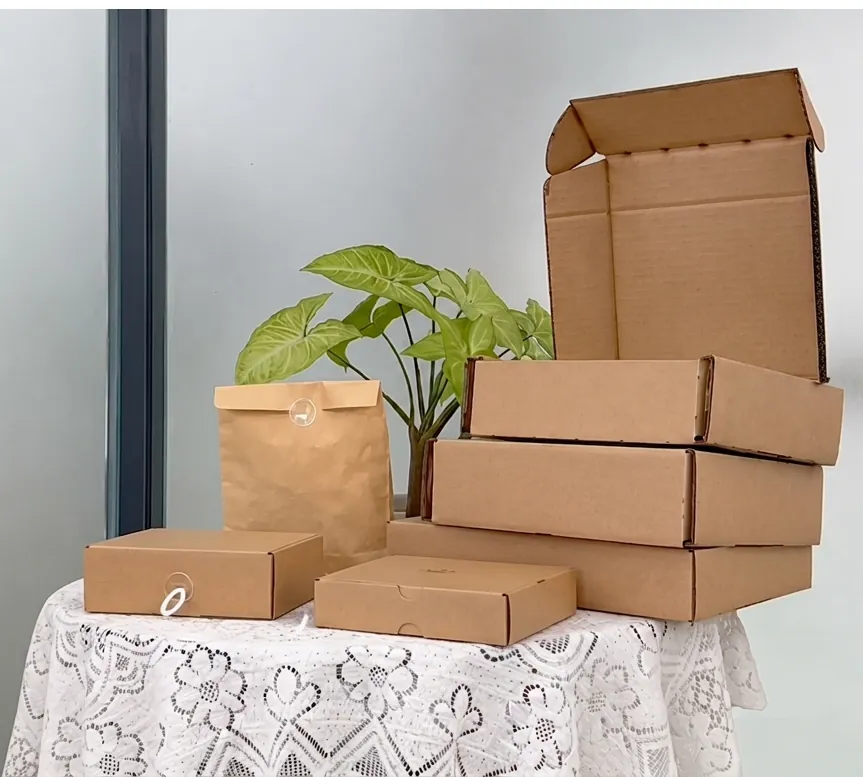
Short answer. A private label loofah order should be backed by a one-page specification that fixes size and tolerance, fibre density grade, colour and whitening method, moisture limit and how it is checked, every component material, packaging, labelling and the sample you approved. Most disputes between brands and suppliers come from a line that was never written down. Packaging is where plastic-free claims most often fail, so specify it as carefully as the product.
This guide is for brands and Amazon sellers preparing a first private label order, or tightening the specification after a batch that did not match the sample. It includes a spec sheet template you can copy. It is written from the supplier side: these are the lines we ask buyers to confirm before we start production, because they are the lines that prevent problems later.
What a loofah spec sheet should include
Natural fibre varies, so the specification sets an acceptable range rather than a single value. Each line below says what to fix and how both sides will check it.
| Field | Example entry | How it is checked |
|---|---|---|
| Product and shape | Rectangular dish pad with cotton loop | Against approved sample |
| Dimensions and tolerance | Length × width × thickness, with a ± tolerance in mm | Ruler on a random sample from each carton |
| Density or firmness grade | Supplier's grade name, with a photo reference | Squeeze test against the reference piece |
| Colour and whitening | Steam-whitened, no chlorine or bleach | Visual check against reference; written confirmation |
| Moisture limit | 12% or below at packing | Handheld meter reading on sample pieces; lab test if agreed |
| Mould and defects | No visible mould, dark spots or broken fibre areas | Visual inspection before packing |
| Components | Cotton loop, cotton thread, cotton binding | Material declaration |
| Unit packaging | Kraft sleeve, printed one side | Against approved mockup |
| Labelling | Brand, material list, origin, care text, barcode | Against approved artwork |
| Carton packing | Units per carton, compression yes/no, carton marks | Packing list and photos |
| Approved sample reference | Sample code and date approved | Kept by both parties |
| Pre-shipment evidence | Photos and video of finished goods | Sent before balance payment |
Why the moisture line matters most
Loofah is mostly air and plant fibre, and fibre takes up moisture. Goods packed damp can develop smell or dark spots during weeks at sea, and the problem only appears when the container is opened. We pack at 12% or below and check finished pieces with a handheld meter. In one recent check, eleven readings on finished pieces ran from 9.5% to 10.5%; the full table is in our hygiene guide. If your market or customer needs a formal test, agree the lab and method in the spec.
Plastic-free packaging options
A plastic-free product in a plastic pouch is a common and avoidable mistake. These are the formats we see most often for loofah, with the trade-offs.
| Format | Good for | Trade-off |
|---|---|---|
| Kraft paper band or sleeve | Eco shops, bundles, lowest cost | Product is exposed; less protection in transit |
| Kraft paper bag | Multi-packs, gift sets | Product hidden unless there is a window or photo |
| Printed kraft box | Amazon, retail shelves | Higher cost; more room for brand and care text |
| Window box | Premium retail, gifting | Window film is often plastic; use an open cut-out instead |
| Compressed pack in paper | FBA, reducing freight volume | Customers need a note that it expands in water |
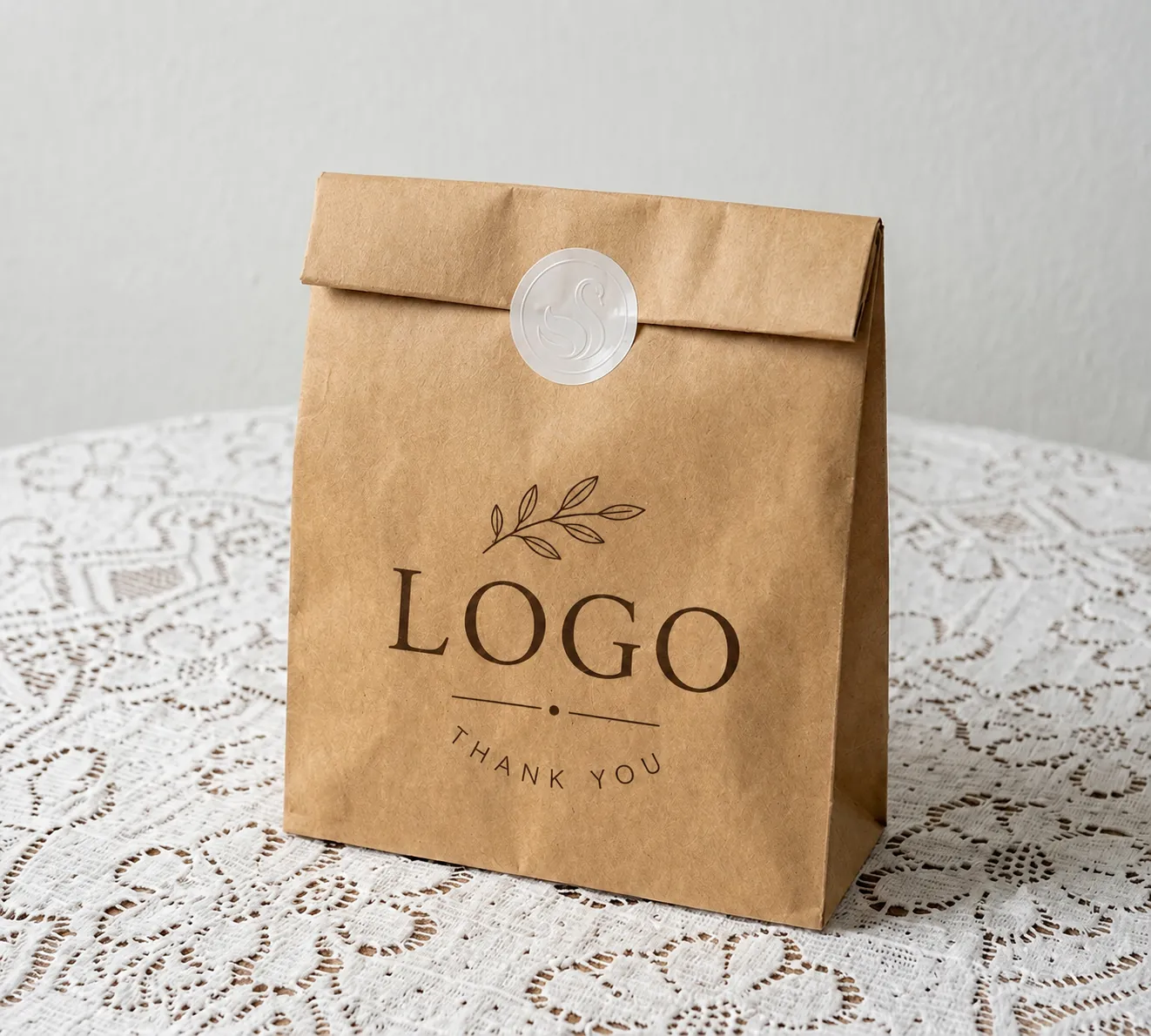
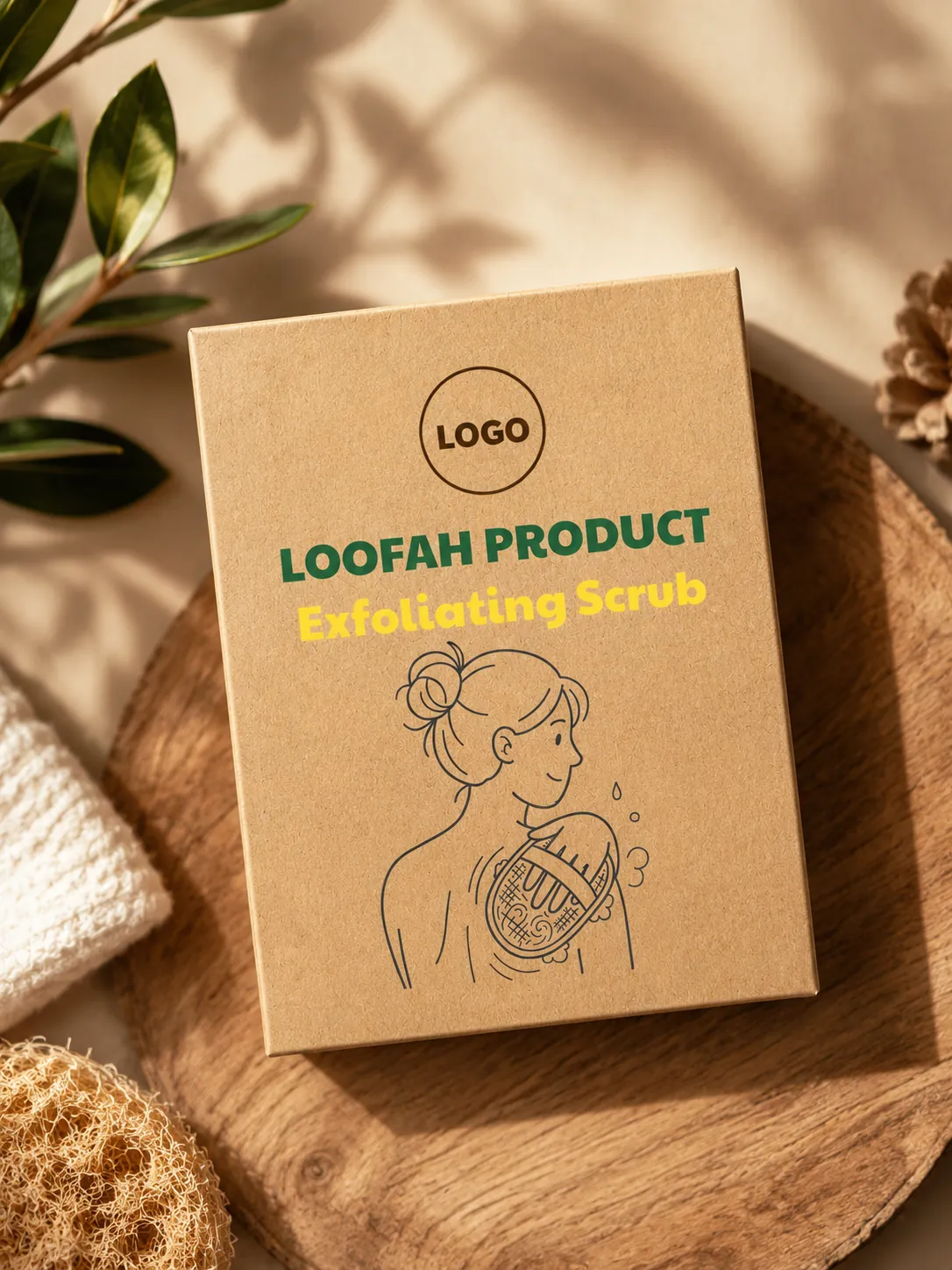
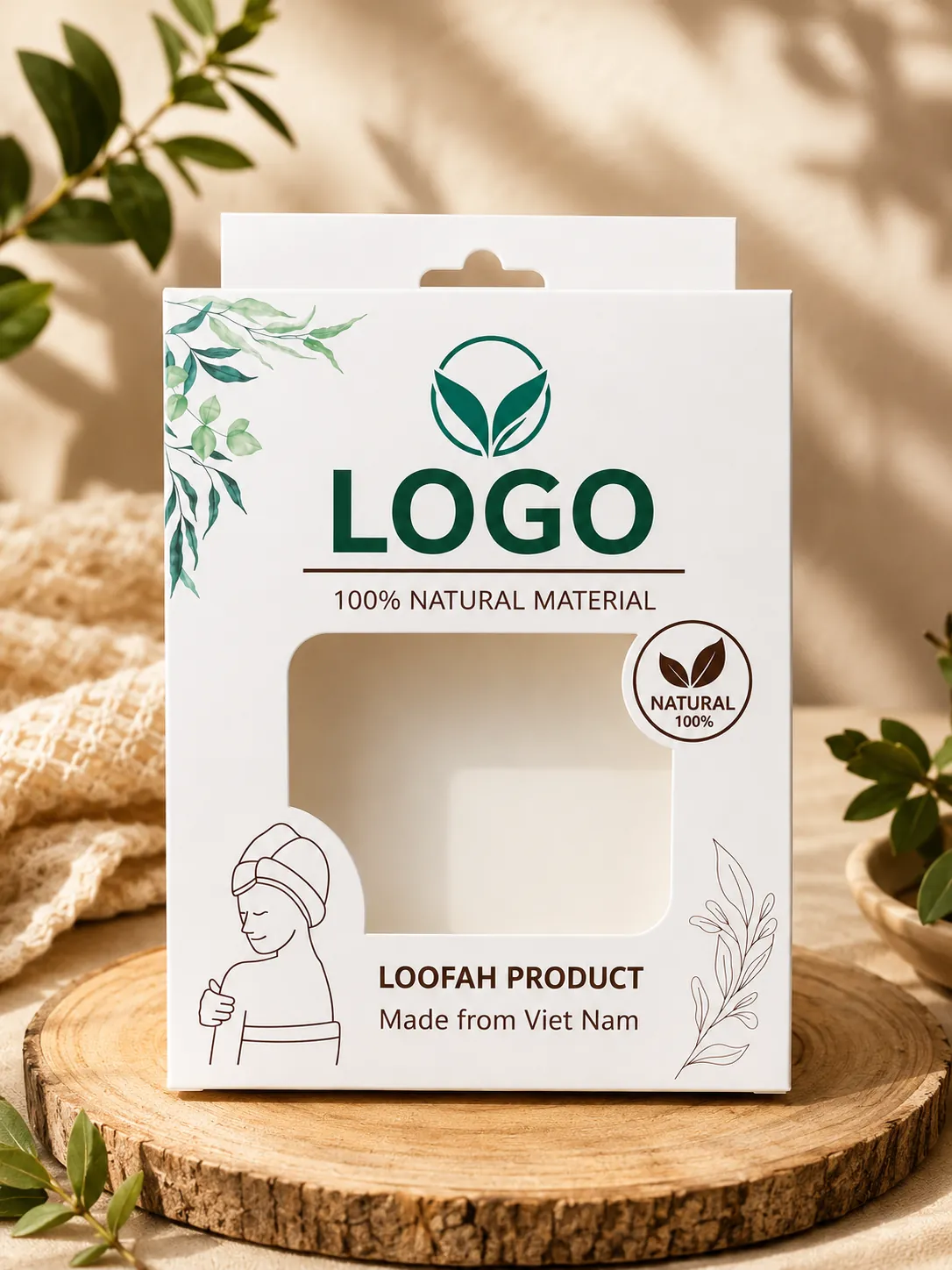
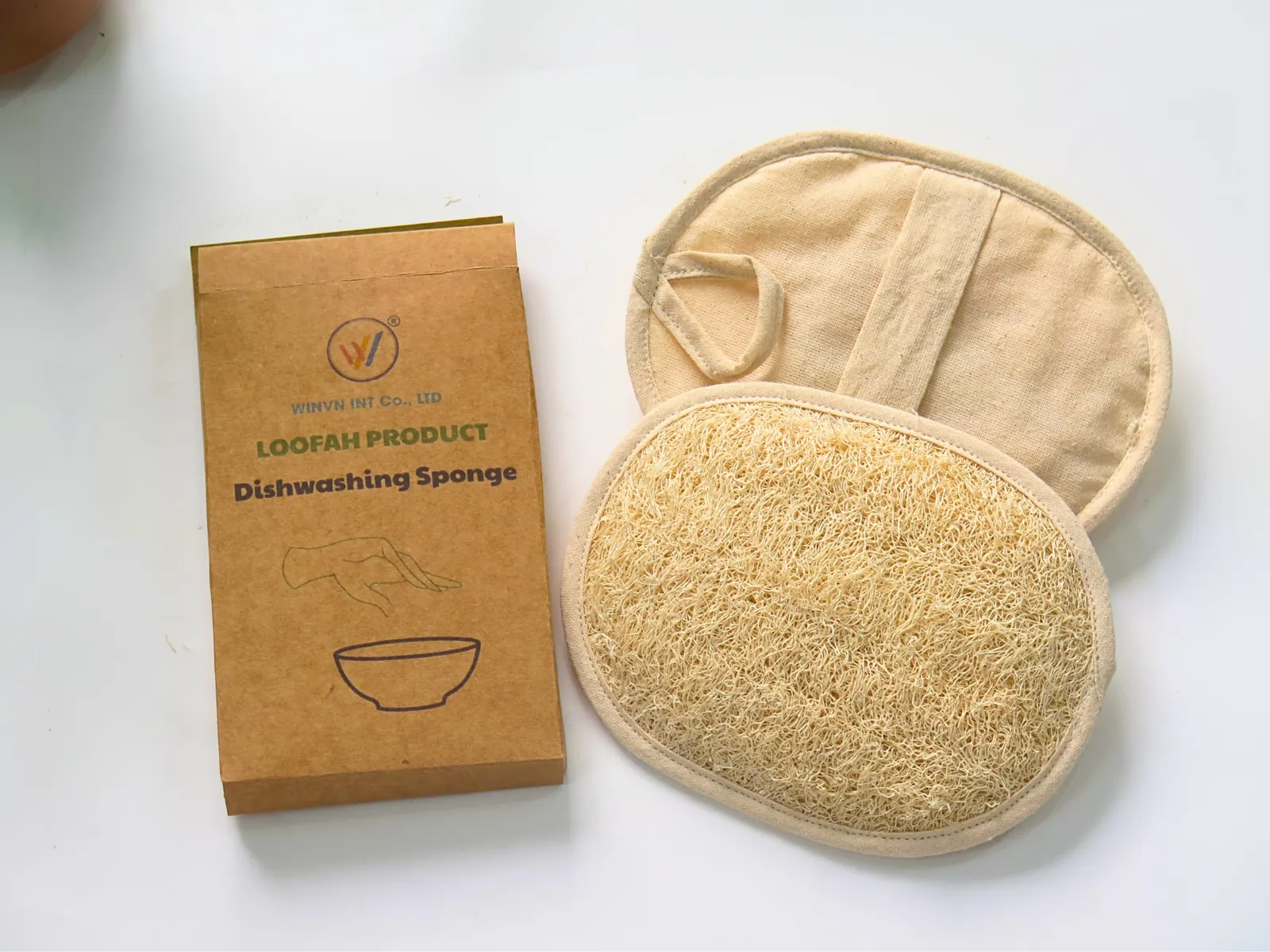
The three images above are design mockups with placeholder logos, used to agree the look with a buyer before any printing.
Labels and claims by market
What you print on the pack has to be true for every component and supportable with documents.
- United States: the FTC Green Guides expect "compostable" claims to cover all materials and to be qualified if the item cannot be composted at home. Unqualified "biodegradable" claims are expected to mean complete breakdown within one year of customary disposal.
- European Union: from 27 September 2026, Directive 2024/825 bans generic claims such as "eco-friendly" or "biodegradable" unless they are backed by recognised excellent environmental performance or explained specifically on the same medium. Plain material statements are safer.
- Everywhere: list materials. "Loofah plant fibre, cotton loop, cotton thread, kraft paper box" is specific and checkable.
We supply a material declaration for each SKU so that brands can support these statements. For the full picture on end-of-life claims, see is loofah compostable?
From sample to bulk order
- Request samples. We send three pieces free; the buyer pays courier. Done when: you have used and dried them for at least a week.
- Fill in the spec sheet. Use the table above. Done when: both sides have signed off each line.
- Approve packaging mockups. Artwork, material and barcode placement. Done when: you have approved a digital proof, and a physical one if needed.
- Confirm order terms. Minimum 100 pieces per SKU; T/T deposit on confirmation and balance before shipment; EXW or FOB Ho Chi Minh City, with CIF or DDP on request. Done when: the proforma invoice matches the spec.
- Production and pre-shipment check. Done when: you have received photos and video of finished goods and they match the approved sample.
- Ship with documents. Invoice, packing list, material declaration, certificate of origin, and phytosanitary papers where required. Done when: your broker confirms the set is complete.
Private label is a good fit if
- You have a sales channel ready (Amazon, shop, subscription box)
- You can wait for samples and mockup approval
- You will test with a small first order
Wait if
- You have not yet tested the product with customers
- You need goods in days rather than weeks
- You have no plan for what the packaging will claim
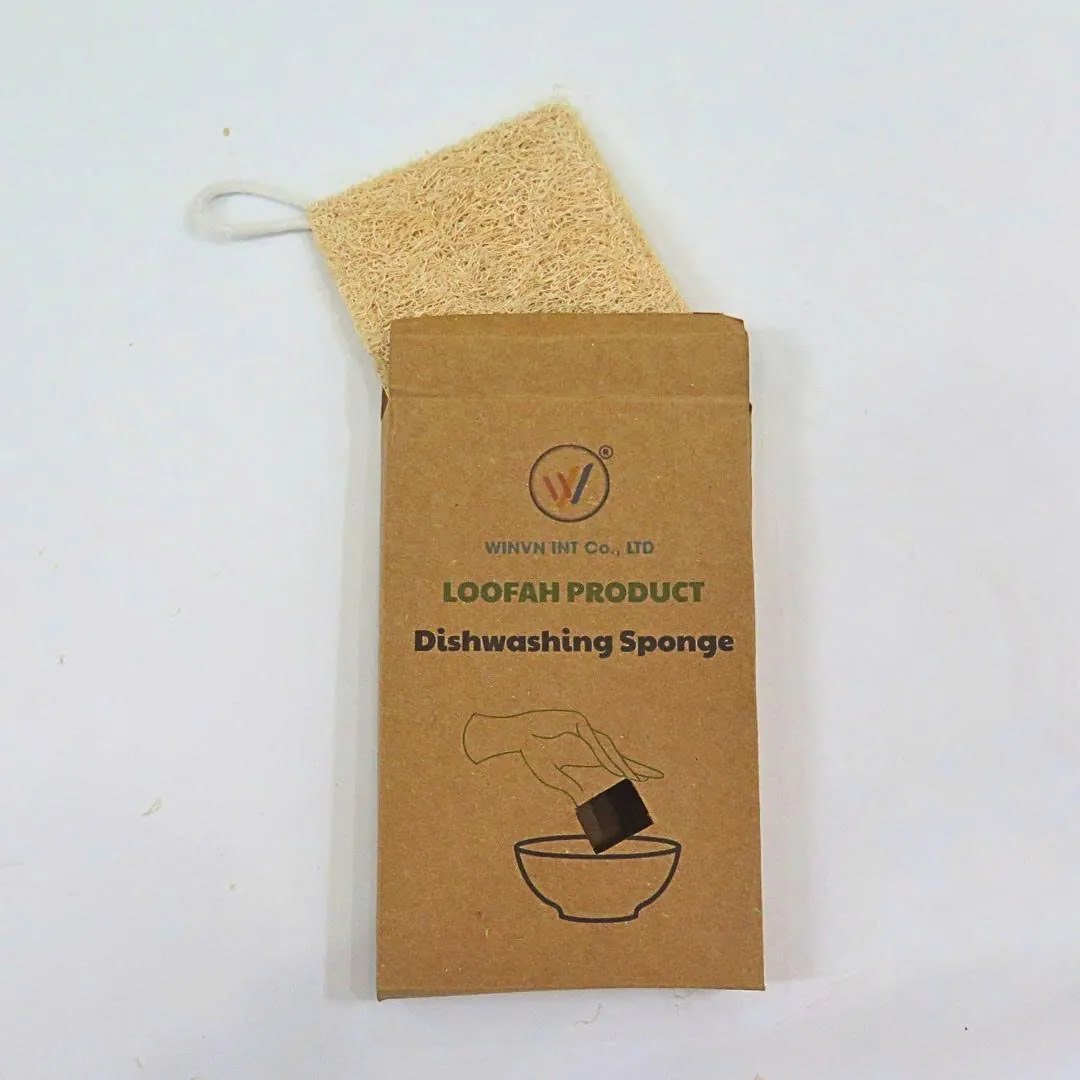
If you sell on Amazon, our private label FBA guide covers compression packing and fees. For cost drivers, see the wholesale price guide. To start, request a sample kit and ask for a blank spec sheet with it.
Frequently asked questions
Sources
- eCFR – 16 CFR 260.7 Compostable claims
- FTC – Environmental claims: summary of the Green Guides
- Directive (EU) 2024/825: generic environmental claims after 27 September 2026
Last updated 2026-09-24. Figures from third-party studies are quoted as published; we have not re-analysed their data.
Natural loofah manufacturer & private-label supplier, Ho Chi Minh City, Vietnam
More from the blog
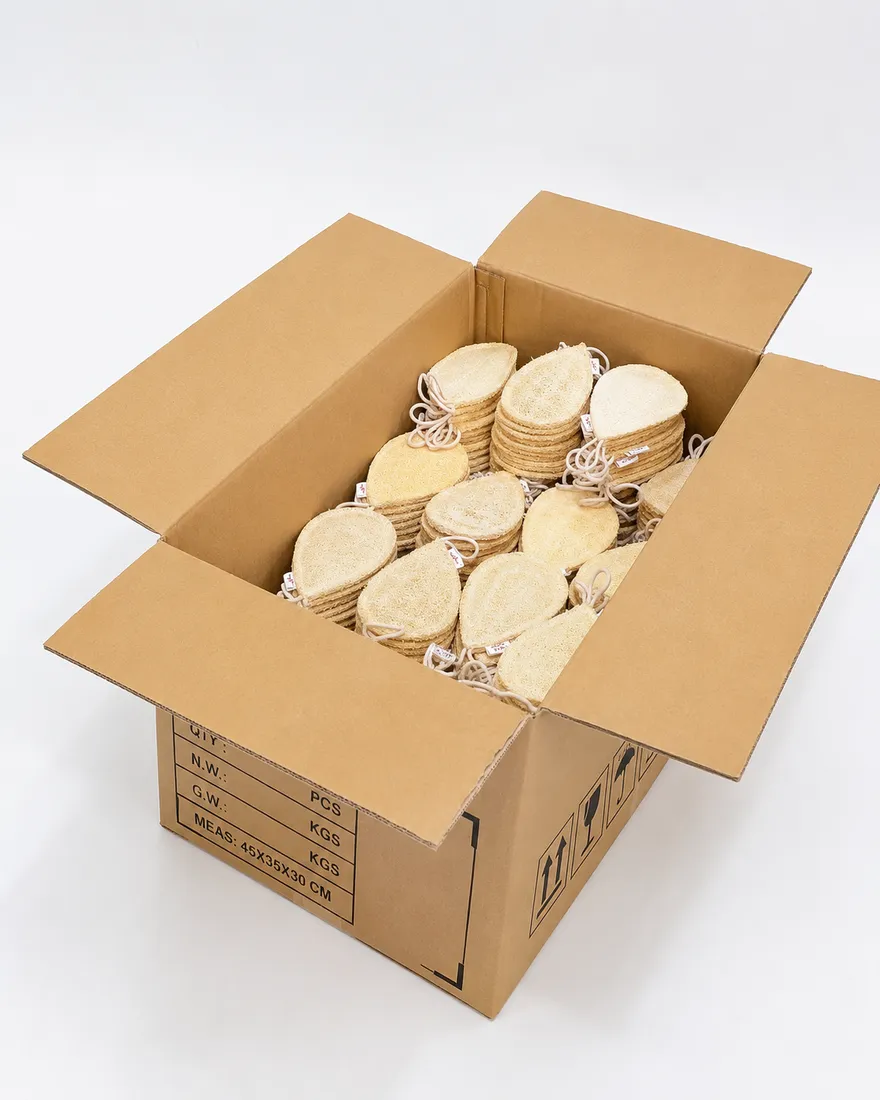
Packaging, QC and freight decisions that decide the margin on a private label loofah listing.
Read article →
Ask three loofah suppliers for a quote and you'll often get three numbers that don't line up. Here's what actually moves the price.
Read article →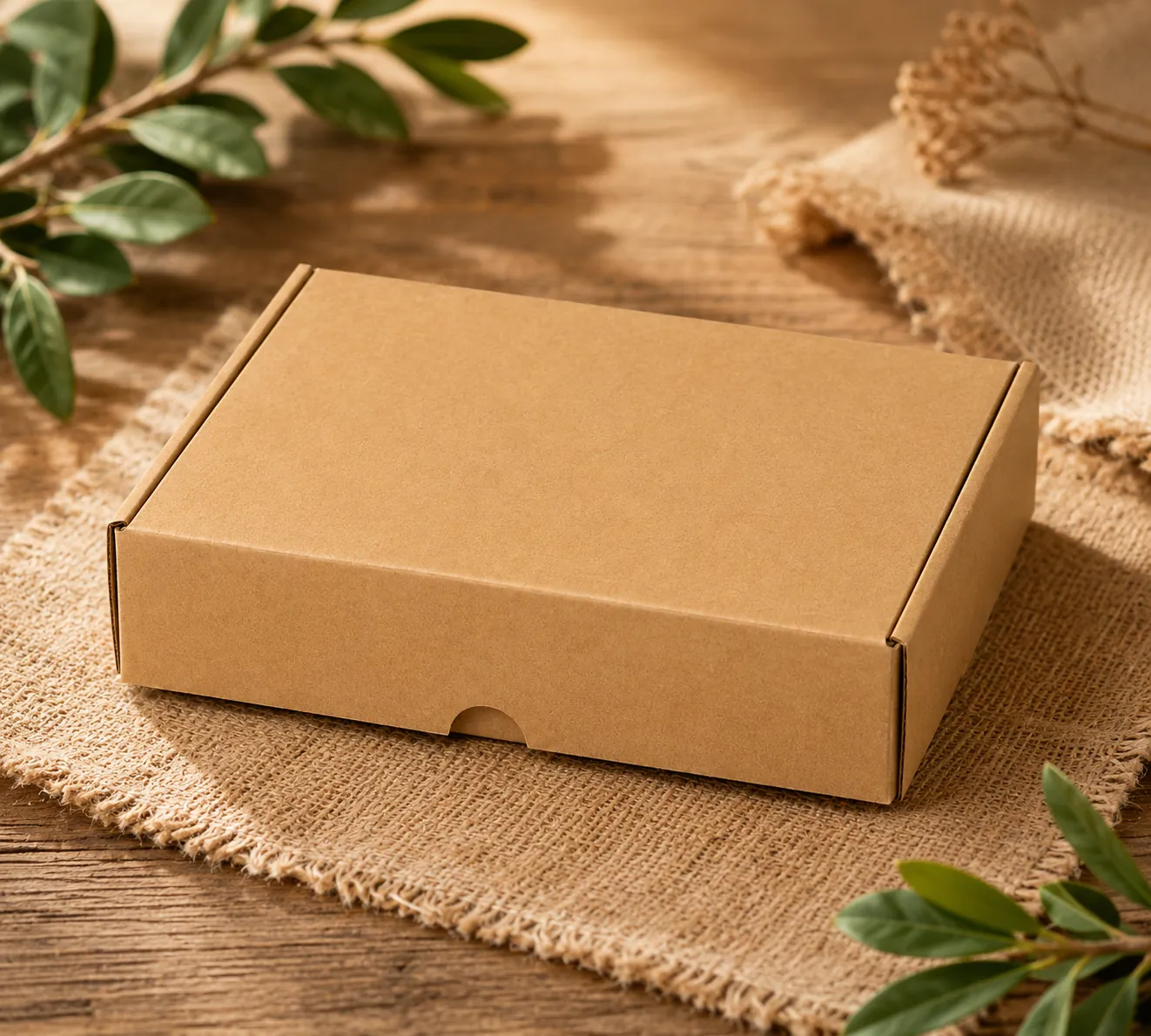
How to compost a used loofah, which components to check first, and what the FTC and the EU allow you to claim on a pack.
Read article →