
Vietnam vs Egypt vs China Loofah: A Sourcing Comparison for Importers
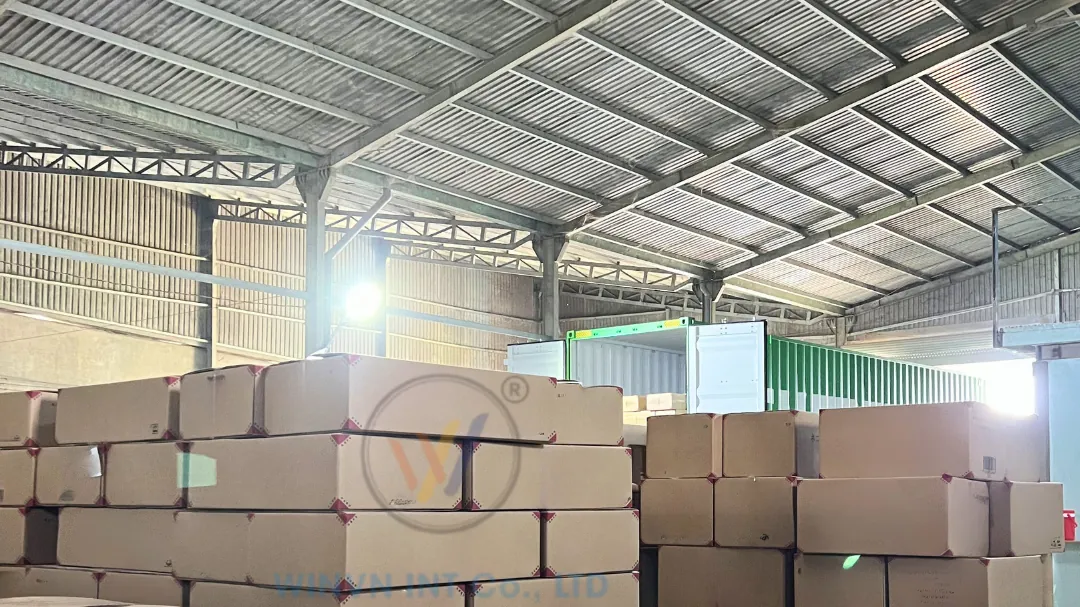
Short answer. Egypt, China and Vietnam can all supply good loofah. Egypt is known for long whole loofahs, China for scale and a wide range of finished bath accessories, and Vietnam for hand-finished products at low minimum order quantities. The country of origin matters less than three things any supplier controls: how mature the fruit was at harvest, how thoroughly it was dried, and how well it is graded. Judge suppliers on samples and documents, not on origin labels.
This article is for importers, distributors and brands that are choosing where to source loofah, or adding a second origin to reduce risk. We are a Vietnamese manufacturer, so we are not neutral. We have tried to describe the other origins fairly, to separate what is documented from what suppliers claim, and to show a buyer how to test the difference for themselves.
What the trade data can and cannot tell you
Buyers often start with trade databases. They are useful, but loofah is hard to track in them because it is declared under broad customs categories and described in many different ways on shipping documents. A keyword search on Volza for "natural loofah" exports, for example, returns 113 shipments up to November 2025, led by India (59) and China (29). That tells you who uses that exact phrase on paperwork. It does not tell you who ships the most loofah.
Market research firms give a wider picture. Future Market Insights projects the fastest growth in the loofah bath sponge category in India (6.2% a year) and China (5.8%) from 2026 to 2036, and notes that supply depends on harvest cycles and that import-dependent regions carry supply risk. For a buyer, the practical point is that no single database gives a reliable ranking of origins. Samples and supplier documents are the evidence that counts.
Egypt, China and Vietnam compared
This table describes each origin as it is usually presented in the market. Where a point comes from supplier claims rather than independent data, we say so.
| Egypt | China | Vietnam | |
|---|---|---|---|
| Known for | Long whole loofahs, raw material | Large manufacturing base for finished bath accessories | Hand-cut and sewn finished products |
| Typical product level | Whole and raw loofah, some finished items | Finished items, often mixed with other materials | Finished pads, gloves, sponges; raw also available |
| Fibre claims | Egyptian suppliers describe a long, loose, soft weave (supplier claim) | Varies widely by factory | Varies by grade; we grade by density and colour |
| Minimum order | Varies by supplier | Often higher for custom products | Varies: LoofahViet lists 300–1,000; ours is 100 per SKU |
| What to verify | Drying and moisture on long sea legs; finishing if you need sewn products | Whether "loofah" items contain plastic mesh or synthetic parts | Consistency between batches; documentation |
Egypt: long whole loofahs
Egypt has a long association with loofah, and "Egyptian loofah" is used as a quality term in some markets. Egyptian suppliers such as EGEXO describe their loofah as having a long, loose weave and a soft texture, suited to sensitive skin, and describe Asian loofah as shorter, tighter and coarser. Those are supplier claims. We have not seen an independent study that compares fibre by country Fibre texture also depends heavily on maturity at harvest and on processing, which vary within every producing country.
Good fit if
- You want whole, long loofahs for retail or for your own cutting
- Softer texture is part of your product positioning
Check carefully if
- You need finished, sewn products at low quantities
- You cannot verify moisture before shipment
China: scale and range
China is a major source of bath accessories of all kinds, and many "loofah" products sold online are made there. The range is the advantage: one factory may offer loofah, silicone, sisal and mesh products with the same packaging. That range is also the risk. A product listed as a loofah may be plastic mesh, or a loofah pad with a polyester backing and a nylon loop. If your brand promise is plastic-free, the specification has to say so line by line.
Good fit if
- You need large volumes and a wide mixed range
- You have a sourcing agent or QC team on the ground
Check carefully if
- You claim "100% natural" or "plastic-free" on the pack
- You want to start with small test orders
Vietnam: hand-finished products, small runs
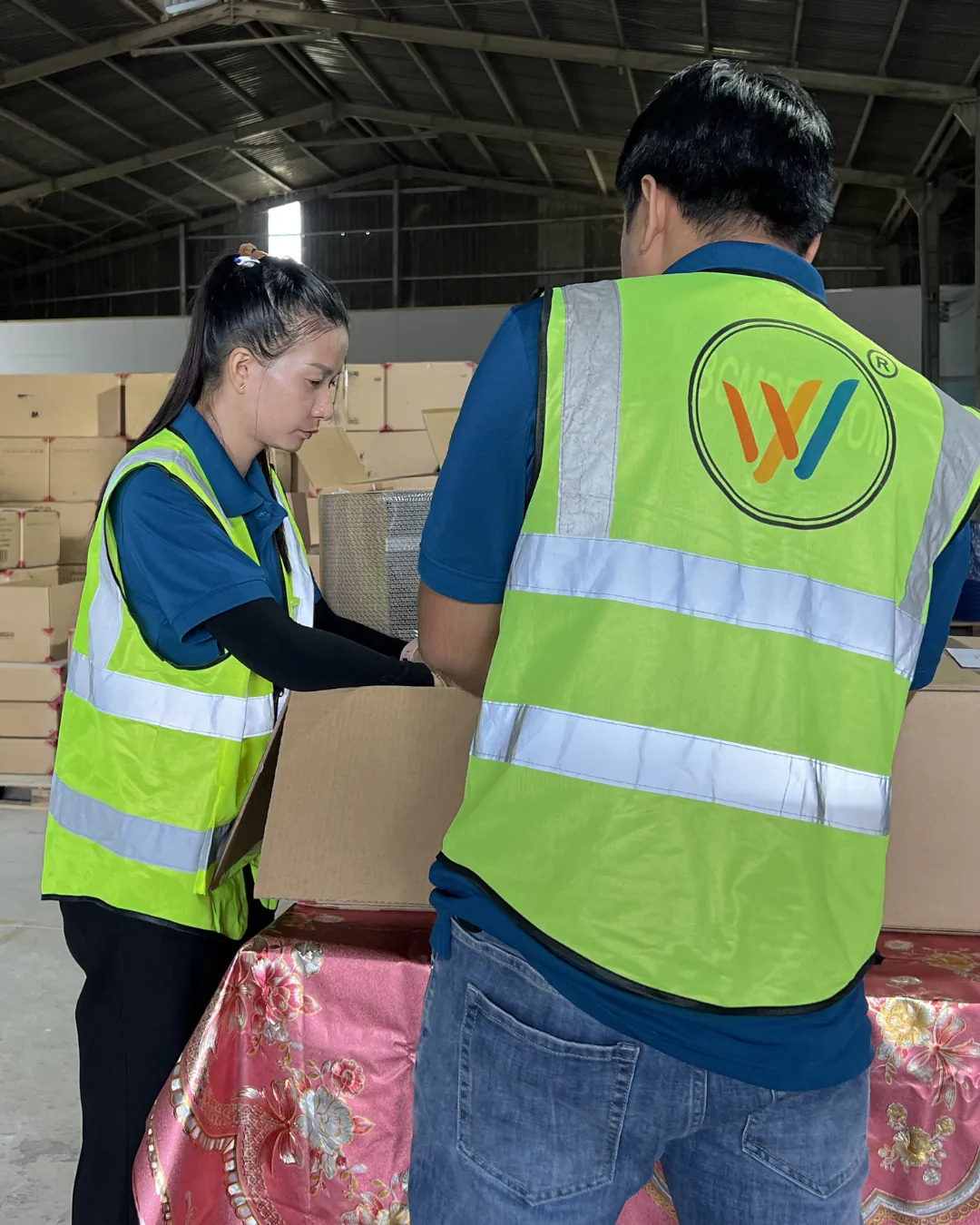
Vietnam grows loofah across several regions. Our supply comes from farmers in Central Vietnam, where the crop is part of household income and has to cope with a heavy storm season. The strength of Vietnamese production is hand finishing: cutting, pressing and sewing loofah into pads, gloves and shaped sponges, with cotton loops and binding. Workshops that finish by hand can often run small quantities, which suits brands testing a new line.
Good fit if
- You want finished, plastic-free products ready for retail
- You want to test a listing or shelf with 100–500 pieces per SKU
- You need private label packaging at small volumes
Check carefully if
- You need very large, single-SKU volumes quickly (ask about harvest timing)
- The supplier cannot show how they check moisture
What actually drives quality, wherever it comes from
| Factor | Why it matters | How to check it on a sample |
|---|---|---|
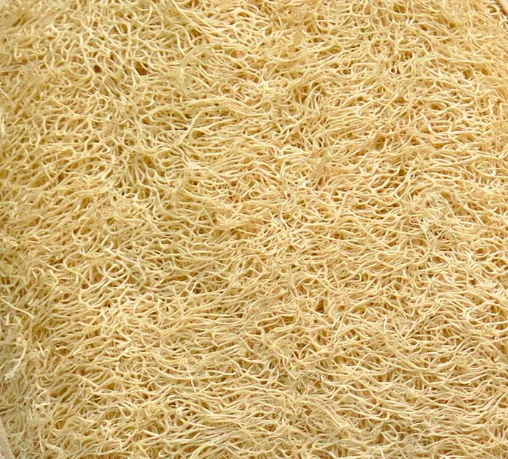
| Maturity at harvest | Early fruit gives thin fibre that falls apart | Squeeze it: good fibre springs back |
| Drying | Damp fibre moulds in a container | Smell it straight from the pack; ask for moisture readings |
| Whitening method | Chlorine weakens fibre and complicates claims | Ask in writing; note any chemical smell |
| Grading | Mixed textures cause "not as pictured" returns | Order several pieces of one SKU and compare |
| Components | Synthetic loops or thread break plastic-free claims | Request a material declaration |
Documents and compliance by destination
Loofah is a plant product, so import paperwork can include more than an invoice. Requirements change and depend on the product level (raw or finished) and the destination, so confirm the list with your customs broker before the first order.
- Every shipment: commercial invoice, packing list, product specification and material declaration.
- Often requested: certificate of origin, which can matter for duty treatment.
- Where the market requires it: phytosanitary certificate. In the US, plant-import rules are set by USDA APHIS; in the EU, plant health rules apply to certain plant products.
- For environmental claims: documentation that supports each claim. In the EU, generic claims such as "eco-friendly" are restricted from 27 September 2026 under Directive 2024/825.
How to test suppliers from any origin
- Order the same SKU from two or three suppliers. Done when: you hold comparable samples side by side.
- Check them dry. Smell, colour consistency, stitching, loops. Done when: you have notes and photos for each.
- Use them for two weeks. Wet, use and dry each one daily. Done when: you know which holds shape and which sheds.
- Ask each for documents. Material declaration, moisture limit and method, export papers. Done when: you know who answers clearly and quickly.
- Place a small first order. Then compare the bulk shipment with the sample you approved. Done when: the bulk goods match.
For a fuller vetting list, use our 8-point supplier checklist. For how price differs between suppliers, read the wholesale price guide. To see how we work, visit the quality and process page or request a sample kit.
Frequently asked questions
Sources
- Volza – Natural loofah export data (to Nov 2025)
- Future Market Insights – Loofah Bath Sponge Market (2026)
- EGEXO – Egyptian vs Asian loofah (supplier article)
- LoofahViet – Wholesale and private label loofah (MOQ information)
- Directive (EU) 2024/825: generic environmental claims after 27 September 2026
Last updated 2026-09-19. Figures from third-party studies are quoted as published; we have not re-analysed their data.
Natural loofah manufacturer & private-label supplier, Ho Chi Minh City, Vietnam
More from the blog
Most sourcing failures in natural fibre trace back to the same handful of skipped checks.
Read article →
Ask three loofah suppliers for a quote and you'll often get three numbers that don't line up. Here's what actually moves the price.
Read article →
The one-page specification that prevents most sample-versus-bulk disputes, plus the packaging formats that keep a plastic-free claim true.
Read article →