Quality
How to Stop Loofah Going Mouldy in a Shipping Container
The short answer
Loofah goes mouldy when fibre is packed damp or when condensation forms inside the container during the voyage. Pack at 12% moisture or below, checked with a meter per batch; keep packs sealed; add container desiccant for long or monsoon-season sailings; and store cartons off the floor away from exterior walls. Damage concentrated at the top and door end points to condensation; damage spread evenly points to wet packing.
Of all the ways a loofah order can fail, mould is the most expensive: it is usually found on arrival, it affects whole cartons, and a musty smell ends a listing quickly. It is also the most preventable.
Where the moisture comes from
- Fibre packed damp. Loofah takes up moisture from the air. If it is not dried to a measured level before packing, the carton starts the voyage wet.
- Condensation at sea. A sealed container warms by day and cools by night. Moisture condenses on the steel roof and walls and drips onto the top layers of cargo.
- Storage after arrival. Cartons on a damp floor or against a cold exterior wall pick up moisture in your warehouse.
Pack at a measured moisture level
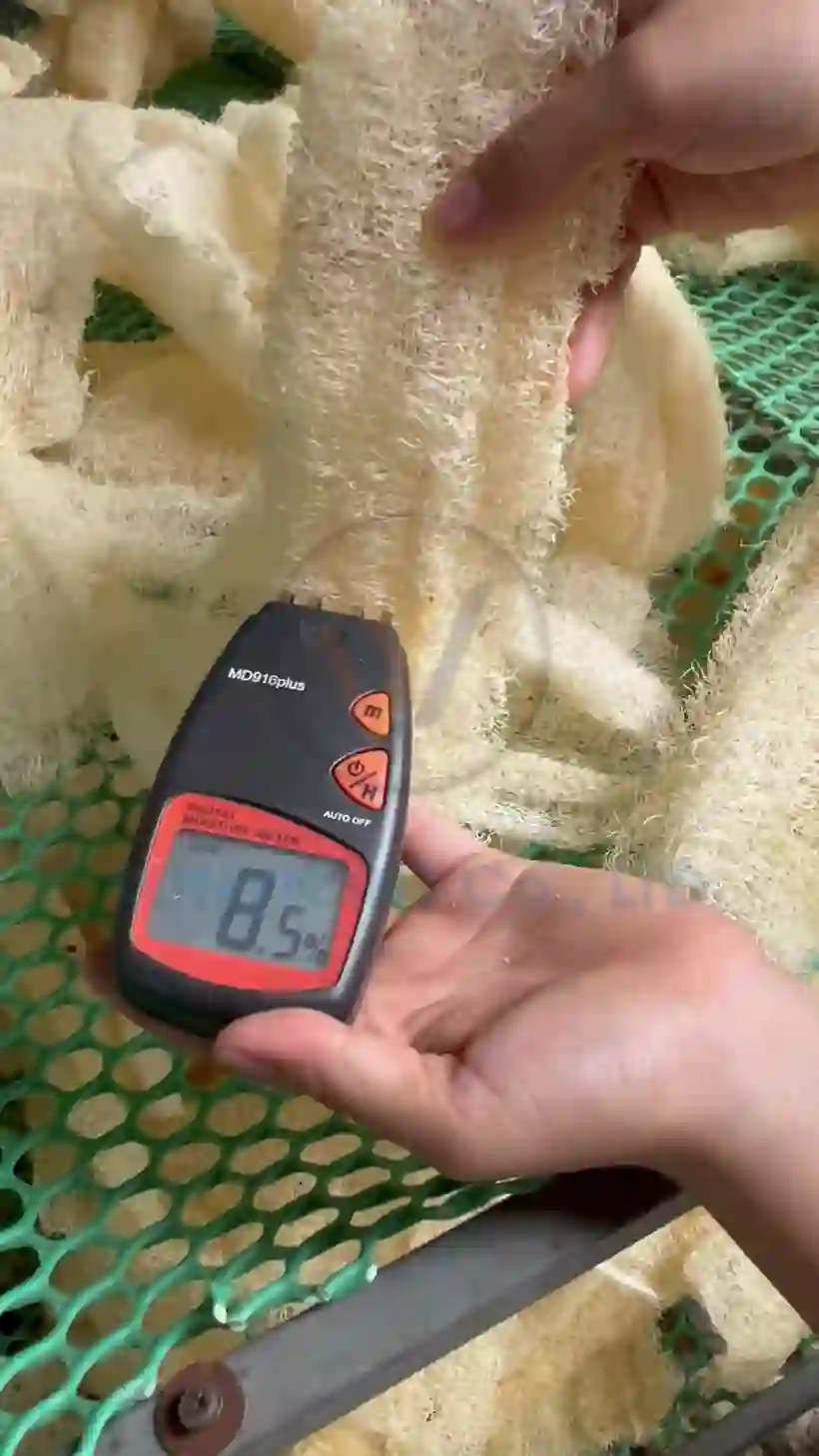
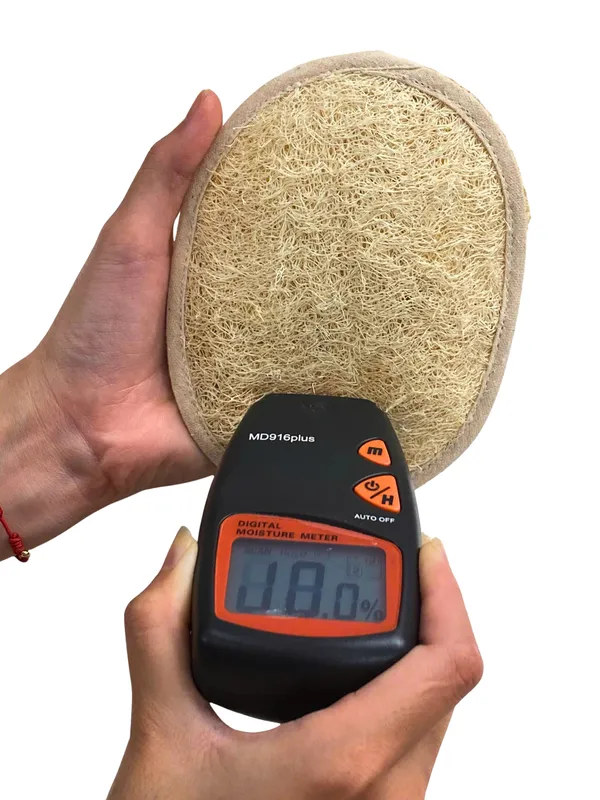
Moisture is checked with a moisture meter on every batch and must read 12% or below before packing. Ask for the reading filed against your lot. A number and a method are what to ask any supplier for.
Reading the damage: condensation or wet packing?
| What you see | Likely cause | What to do next time |
|---|---|---|
| Damage on the top layer and near the doors | Condensation in transit | Container desiccant; avoid packing against the roof; consider sailing season |
| Damage spread evenly through the stack | Goods packed damp | Ask for the moisture reading per lot; independent check before loading |
| Damage only on floor-level cartons after storage | Warehouse conditions | Pallets, distance from walls, ventilation |
A checklist for importers
- Ask for the moisture reading filed against your lot.
- For an important shipment, have an inspector witness the moisture reading before loading.
- Add container desiccant for long or monsoon-season voyages.
- Unload promptly and photograph carton positions if anything looks wrong.
- Store on pallets, away from exterior walls and roller doors, out of direct sun.
- Keep packs sealed until use, and keep one sealed pack from each lot as a reference.
If it happens anyway
Photograph the affected cartons in their position in the container before moving them, note which layers are affected, and send the photos with the lot number. The pattern of damage is the most useful evidence for working out what happened.
Frequently asked
What moisture level should loofah be packed at?
We pack at 12% or below, measured with a moisture meter on every batch.
Is a little mould smell normal for natural loofah?
No. Finished loofah should smell of dry plant fibre. A musty smell means moisture got in.
Does vacuum packing prevent mould?
Only if the fibre was dry when packed. Sealing damp fibre traps the moisture inside.
Written from our own production and export experience. General information, not legal or compliance advice; confirm requirements for your market with your own advisor.