Sourcing
How to Choose a Natural Loofah Supplier: 8 Checks Before You Order
The short answer
Run eight checks before you pay a deposit: get a physical sample, ask for the moisture number and how it is measured, ask how the fibre is whitened, match the MOQ to your real risk, see a packaging mockup, ask for redacted documents from a past shipment, test how fast technical questions are answered, and find out where the fibre is actually grown.
Natural loofah looks simple to source until the first delivery arrives with brown spots, a musty smell or sizes that have drifted from the sample. Most of those failures are predictable, and most trace back to a handful of skipped checks.
1. Get a physical sample first
Photos hide what matters in loofah: fibre density, how soft it gets when wet, smell and stitching. A supplier who resists sending samples is telling you how the rest of the relationship will go. Keep one piece from the approved sample as your retained reference.
2. Ask for the moisture number — and the method
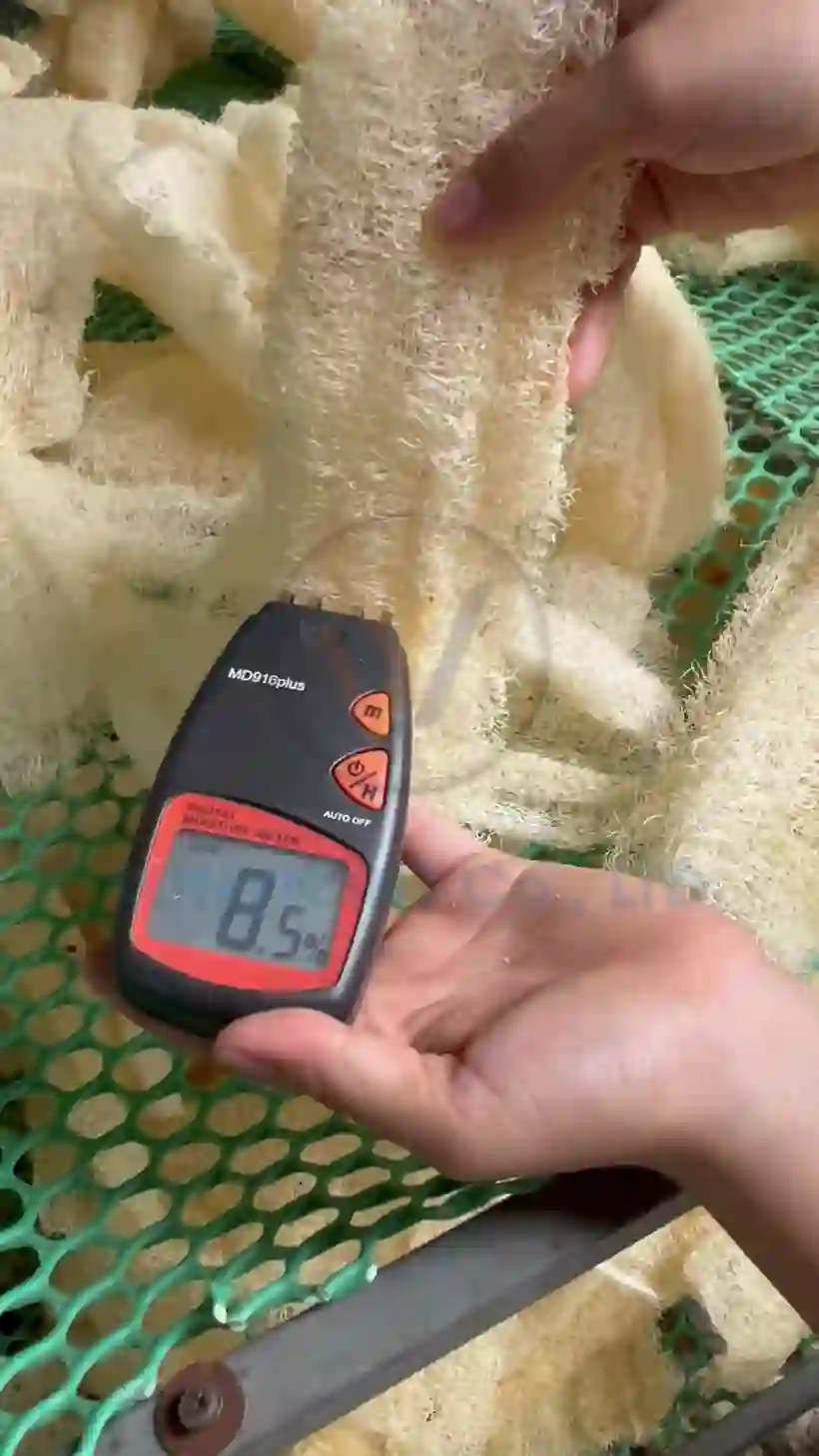
Mould is the biggest quality risk in a sealed container. The answer should be a number and a method, not “don’t worry, it’s dry”. Moisture is checked with a moisture meter on every batch and must read 12% or below before packing. Ask for the reading filed against your lot.
3. Ask how the fibre is whitened
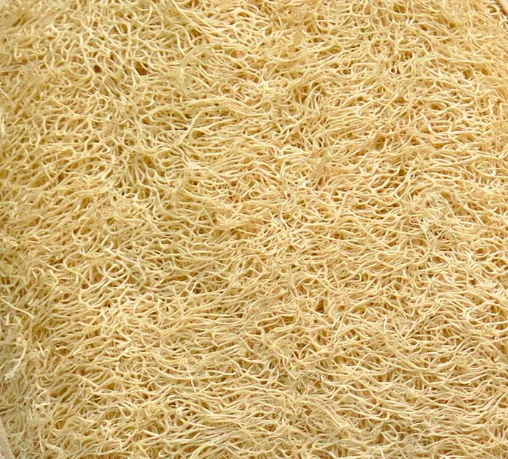
A very white loofah has usually been whitened. Ask whether that was done with steam or with chemical bleach, and ask for the answer in writing on the quotation. If a supplier cannot explain the process, assume the cheapest one. Natural and steam-whitened fibre compared.
4. Match the MOQ to your real risk
A 3,000-piece minimum on an untested product is inventory risk dressed up as a wholesale price. Look for a trial quantity that lets you test sell-through — ours is 100 pcs per SKU.
5. See a packaging mockup
Anyone can say “yes, private label”. Ask for a mockup with your artwork before you commit. How quickly and how well it comes back tells you whether packaging is really handled in-house.
6. Ask for documents from a past shipment
A supplier who has exported to your market can show a bill of lading, certificate of origin and, where required, phytosanitary and fumigation certificates from earlier orders, with customer details redacted.
7. Test communication before you pay
Send a technical question and time the answer. Suppliers who go quiet after the deposit usually showed it earlier: vague answers, no documents, slow replies. Pre-shipment photos and video should be offered, not extracted.
8. Find out where the fibre is grown
Ask where the loofah comes from and who buys it from the growers. A supplier who buys directly controls quality from the vine. Ours is grown by smallholders in Central Vietnam and bought directly at agreed prices.
A checklist you can copy
| Check | Good answer | Warning sign |
|---|---|---|
| Sample | Sent promptly; free or low cost | Refused or expensive |
| Moisture | A number and a meter method | “It’s dry” |
| Whitening | Method stated in writing | No explanation |
| MOQ | A genuine trial quantity | Container-only |
| Private label | Mockup before commitment | “Yes” with nothing to show |
| Documents | Redacted examples available | None to show |
| Communication | Specific answers, fast | Vague and slow |
| Sourcing | Named region, direct buying | “Various suppliers” |
Frequently asked
What is the single most important check?
Moisture. Ask for the number, the method, and the reading for your lot. Most arrival problems start there.
Should I visit the factory?
If the order matters, yes — or send a third-party inspector to check goods and witness the moisture reading before loading.
Is the cheapest quote a red flag?
Not always, but compare like for like: same size, density, whitening, pack and Incoterm. Our price guide explains why quotes differ.
Written from our own production and export experience. General information, not legal or compliance advice; confirm requirements for your market with your own advisor.