Kitchen
Loofah vs Cellulose vs Silicone vs Melamine: Which Plastic-Free Kitchen Sponge Works?
The short answer
No single kitchen sponge wins on every job. Natural loofah is the best plastic-free choice for daily dishes and non-stick pans, and it can be composted. Cellulose absorbs spills better than anything else here. Silicone lasts longest and is easy to sanitize, but it is a synthetic polymer. Melamine removes stains on hard surfaces, yet it works by wearing itself away and sheds microplastic fibres as it does.
This comparison is for shoppers choosing a sponge and for shops deciding which ones to stock. We make loofah products, so we have a stake in the answer. To keep this useful, we have separated facts about each material from our own judgement, and we say where each alternative does a better job than loofah.
The comparison at a glance
Material and end-of-life columns are facts about the materials. The performance columns (scrubbing, absorbency, drying) are our assessment of how each material is built and behaves in use. They are not results from a laboratory test.
| Sponge | Made of | Plastic | Scrubbing | Absorbs water | Dries | Safe on non-stick | End of life | Best for |
|---|---|---|---|---|---|---|---|---|
| Natural loofah | Luffa plant fibre | None | Medium to firm | Low | Fast | Yes, once wet | Plant fibre; remove the loop first | Daily dishes, pans, vegetables |
| Cellulose sponge | Regenerated wood cellulose | Usually none; check for a scrub layer | Soft | High | Slow | Yes | Compost if fully cellulose | Wiping spills and counters |
| Silicone scrubber | Silicone polymer | Synthetic polymer | Soft to medium | None | Very fast | Yes | Not compostable | Long life, frequent sanitizing |
| Melamine foam | Melamine-formaldehyde foam | Yes | Abrasive | Medium | Medium | No, it can dull coatings | Landfill | Occasional stains on hard surfaces |
| Foam sponge with scourer | Polyurethane plus nylon or polyester | Yes | Soft side and harsh side | High | Slow | Soft side only | Landfill | General use (what most people own) |
| Knitted acrylic scrubber | Acrylic yarn | Yes | Medium | Low | Medium | Yes | Landfill | Low-detergent washing |
Natural loofah
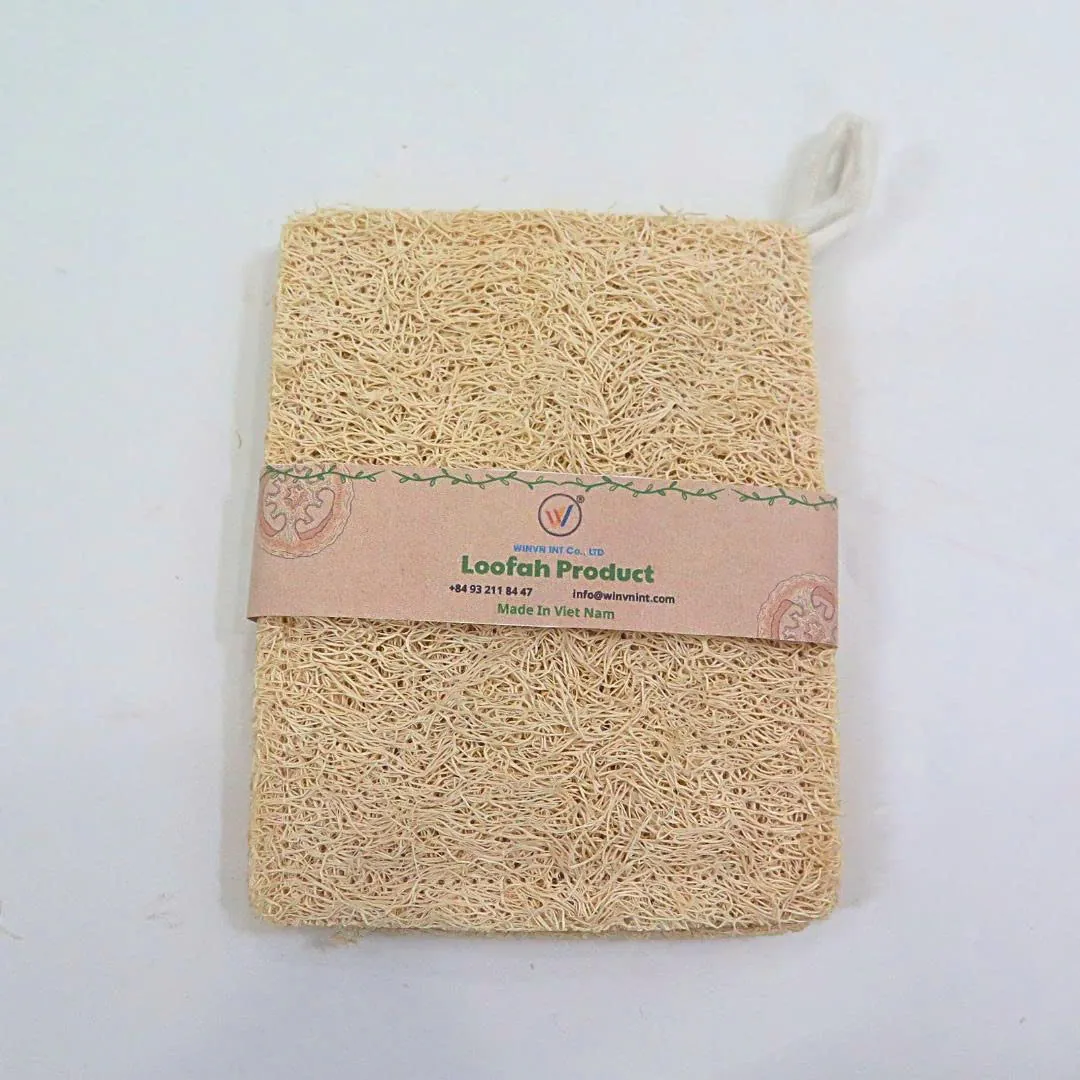
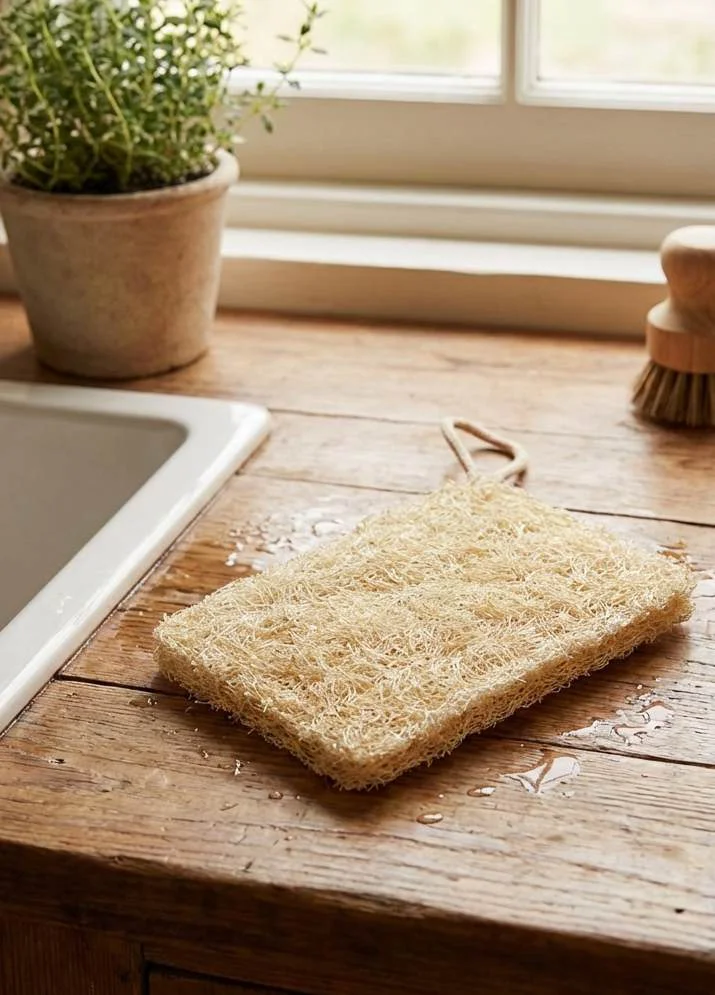
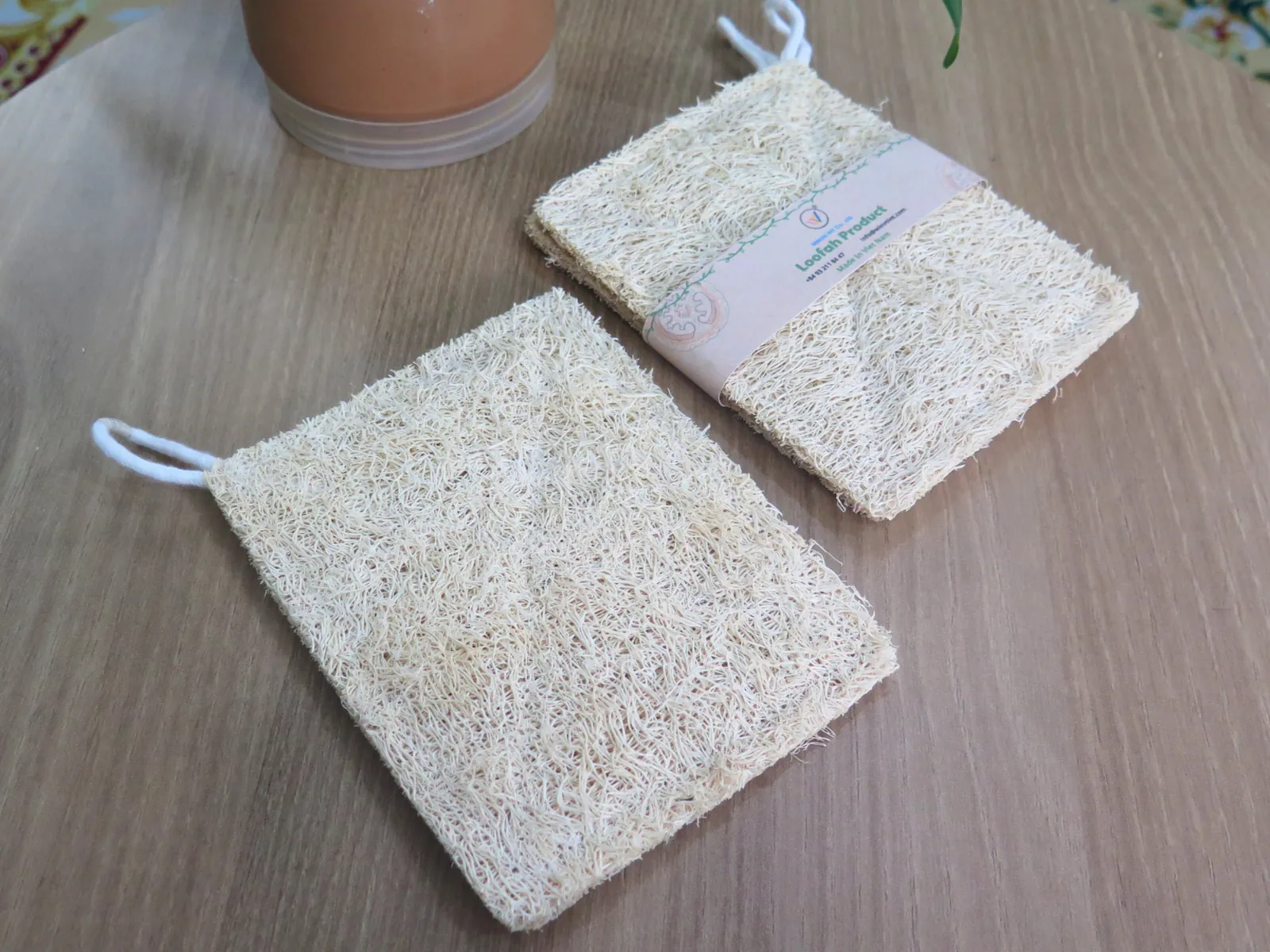
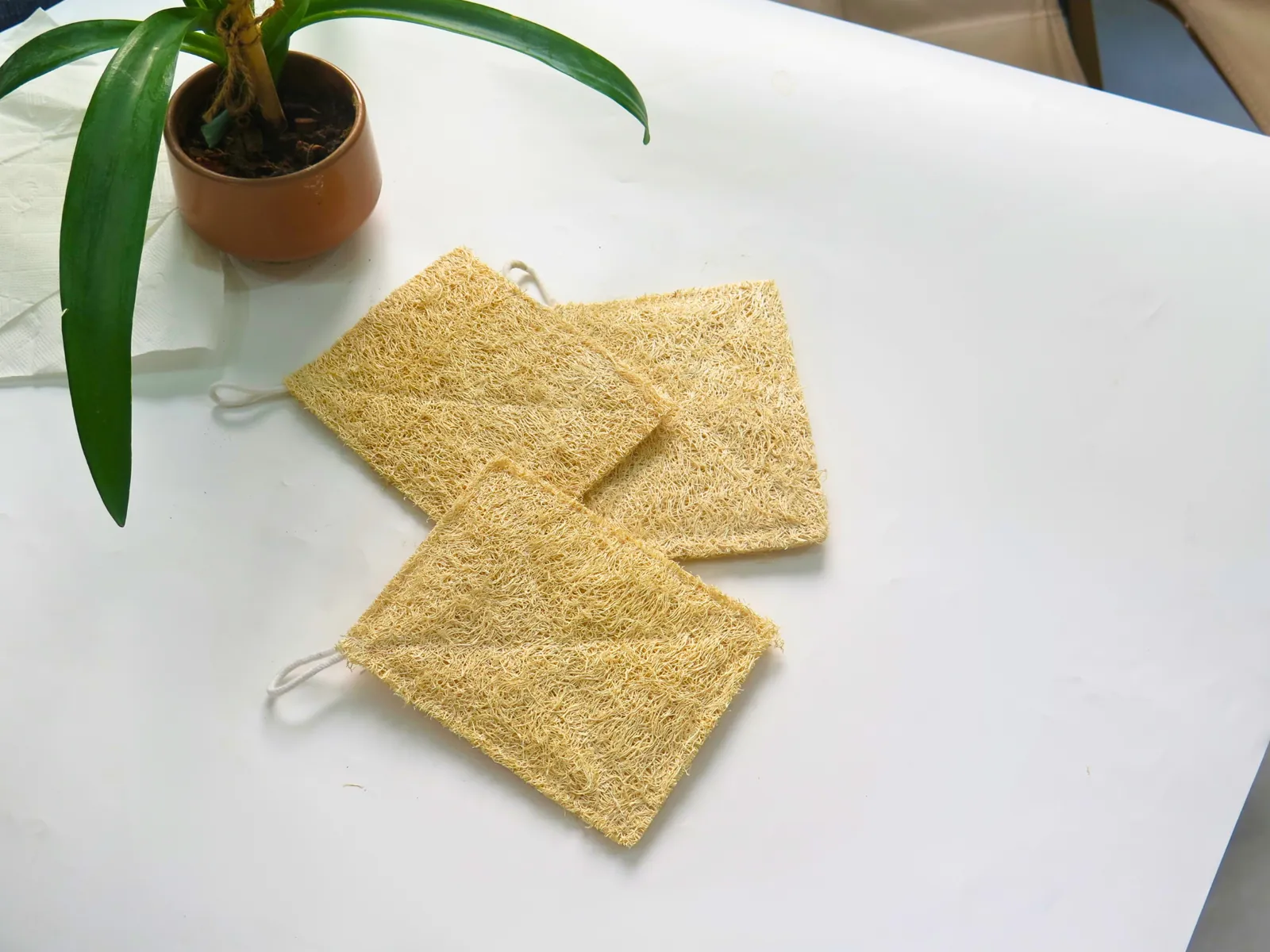
A loofah dish pad is made from the fibre skeleton of the sponge gourd, cut flat and usually sewn at the edges. Dry, it feels stiff and scratchy. Under water it softens within seconds and becomes springy, which is what makes it safe on non-stick coatings while still lifting stuck food. Because the structure is open, water drains out of it fast.
ELEMINIST, a Japanese sustainability site that reviewed thirteen eco dish sponges, noted that hechima (loofah) dries quickly and that its fibres wrap around dirt so that most of it comes off without detergent.
Good fit if
- You want no plastic in the product at all
- You wash plates, glasses, non-stick and enamel daily
- You want to compost it when it is worn out
Not a good fit if
- You need to absorb a spill from the counter
- You scrub burnt carbon off steel pans most days
- You want one sponge to last several months
Cellulose sponge
Cellulose sponges are made from wood pulp that is dissolved and regenerated into a foam, often reinforced with cotton fibres. They are the most absorbent option here, which makes them the right tool for wiping counters and soaking up spills. That same absorbency means they hold water for a long time, so they dry slowly.
Check the label. Many "cellulose" sponges have a green or grey scrub layer bonded to one side, and that layer is often polyester or nylon. A sponge like that is no longer plastic-free and cannot be composted whole.
Good fit if
- Wiping surfaces and soaking up liquid is the main job
- You buy a version with no synthetic scrub layer
Not a good fit if
- You need scrubbing power on dried-on food
- Your sink area stays damp and the sponge never dries
Silicone scrubber
Silicone scrubbers are non-porous, so food and skin cells sit on the surface rather than inside, and they can go through a dishwasher repeatedly. They last far longer than any fibre sponge. That durability is their main environmental argument: fewer products bought over time.
The counter-argument is the material. Silicone is a synthetic polymer made from silicon and oxygen with carbon-based groups attached. It is not plant-based, it will not compost, and recycling for silicone kitchen tools is rare. It also scrubs gently, so it struggles with dried-on residue.
Good fit if
- Sanitizing in a dishwasher is the priority
- You want to buy one product and keep it for a long time
Not a good fit if
- You want a product with no synthetic polymer
- You need to scrub baked-on food
Melamine foam
Melamine foam cleans by abrasion. Its structure is hard at a microscopic level, and as you rub, the foam wears down along with the mark. That makes it very effective on scuffs and stains on hard surfaces, and a poor choice for coated cookware, which it can dull.
In April 2026, researchers publishing in Environmental Science & Technology measured about 6.5 million microplastic fibres released per gram of melamine sponge worn away, and estimated 1.55 trillion fibres released worldwide each month. Denser sponges shed fewer fibres. Our detailed summary is in our article on kitchen sponge microplastics.
Good fit if
- You need to remove a specific stain from a hard surface now and then
Not a good fit if
- It would be your everyday dish sponge
- You are trying to cut microplastic release
- You clean non-stick or glossy coated surfaces
Is loofah safe on non-stick and cast iron?
Yes, with one condition: wet it first. A dry loofah pad is stiff enough to leave marks on delicate coatings. Soaked for a few seconds, the fibre softens and flexes, which is why loofah dish pads are widely sold as non-scratch. On cast iron, a wet pad removes food with plain hot water, so you do not have to use soap if you prefer not to. On enamel and glass it is fine.
Where loofah is the wrong tool is heavy burnt-on carbon on stainless steel. A coconut-fibre brush or a steel scourer does that job faster.
How long does each sponge last?
We have not found a published study that compares lifespan across these materials under the same conditions, so we will not give invented numbers. What we can say is what drives lifespan for each one.
- Loofah: fibre density, whether it dries between uses, and how hard it is used on rough surfaces. Denser, well-dried pads last noticeably longer.
- Cellulose: how quickly it dries. Sponges that stay wet start to smell and break down sooner.
- Silicone: very long unless it is cut or torn.
- Melamine: it is designed to wear away, so lifespan depends on how much you scrub.
How to run your own 30-day test
If you are a shop or brand deciding what to stock, test the products the way your customers will use them. This is the protocol we suggest to buyers who order samples.
- Pick three to five candidates. Include the plastic sponge your customers use now as a baseline. Done when: each has a label and a start date.
- Use each for the same job. Evening dishes for one household, for example. Done when: each gets similar daily use.
- Dry them the same way. Hang all of them on the same rail. Done when: drying is not the variable.
- Record weekly. Smell after drying, shape, fibre loss, how well it cleaned. A photo each week helps. Done when: you have four weeks of notes.
- Decide on evidence. Stock what held up, and write your product copy from what you saw. Done when: your listing describes performance you observed.
So which should you choose?
For most kitchens, a two-product setup works better than any single sponge: a loofah pad for dishes and a cellulose cloth or sponge for wiping. That removes plastic from both jobs and plays to each material's strength. Keep melamine, if you keep it at all, for occasional stains.
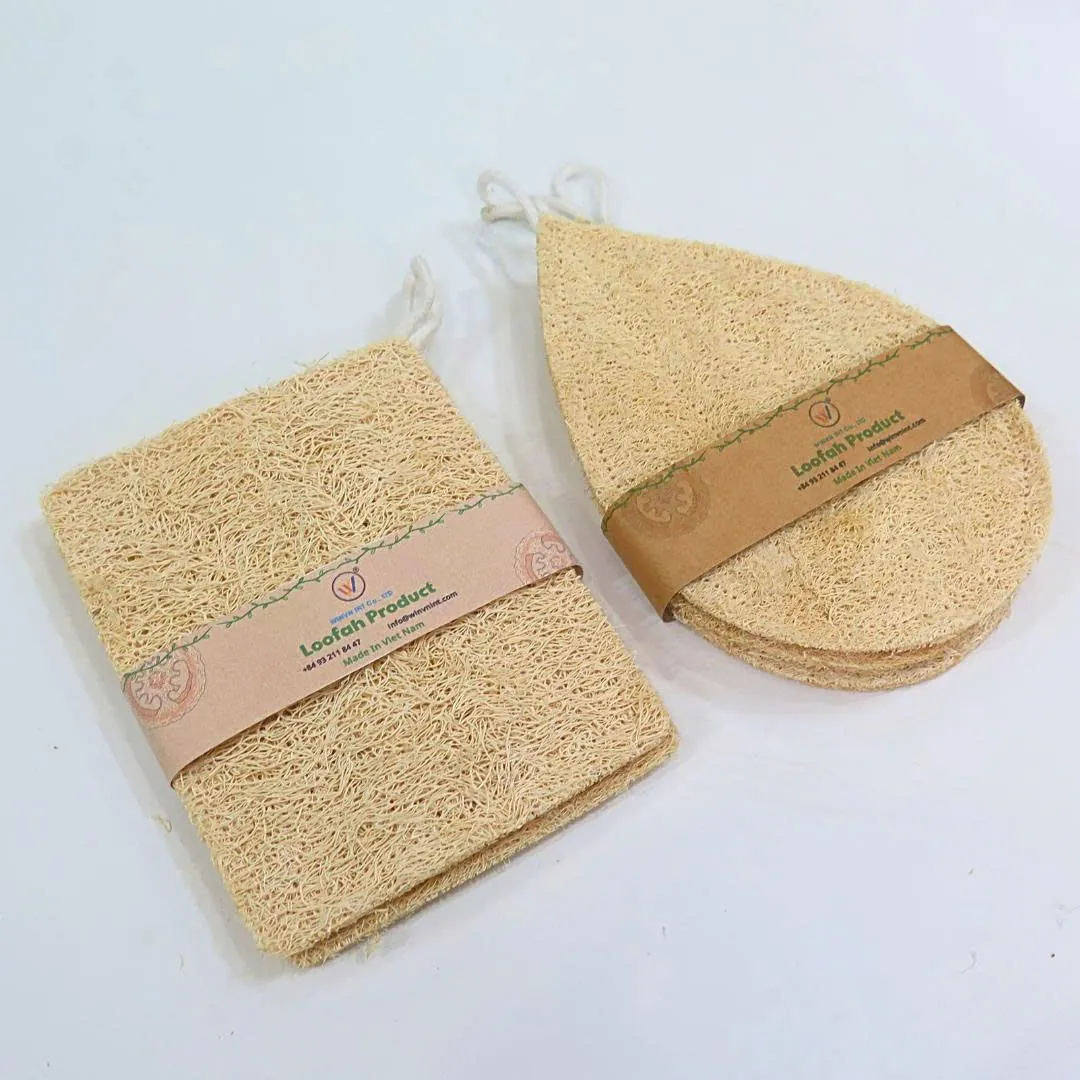
For shops, loofah and cellulose sit well together on a shelf because they solve different problems and neither cannibalises the other. Our kitchen range is the teardrop dishwashing sponge and the rectangular dishwashing sponge, available from 100 pieces per SKU. For the plastic-versus-plant question in general, see natural loofah vs plastic sponges, and for the end of the product's life, how to compost a loofah.
Sources
- ScienceDaily – Melamine sponges release trillions of microplastic fibers (ACS, April 2026)
- ScienceDaily – Your kitchen sponge is releasing microplastics (University of Bonn, June 2026)
- ELEMINIST – 13 eco-friendly dish sponges (Japanese)
- Harper's Bazaar Korea – Acrylic scrubbers are not eco-friendly (Korean)
- I'm Plastic Free – plastic-free sponge types
Frequently asked
What is the best plastic-free kitchen sponge?
For washing dishes, a natural loofah pad. For wiping and absorbing spills, a sponge or cloth made fully of cellulose. Many kitchens use both.
Is loofah safe for non-stick pans?
Yes, once it is wet. A dry loofah is stiff, but it softens within seconds in water and becomes gentle enough for non-stick coatings.
Is loofah better than a cellulose sponge?
They do different jobs. Loofah scrubs better and dries faster. Cellulose absorbs far more water. Check that a cellulose sponge has no polyester scrub layer if you want it plastic-free.
Is a silicone scrubber eco-friendly?
It lasts a long time, which reduces how many you buy, but silicone is a synthetic polymer, is not plant-based and cannot be composted.
Should I stop using melamine sponges?
A 2026 study found melamine sponges shed millions of microplastic fibres per gram worn away. If you keep one, use it only for occasional stains on hard surfaces.
Are knitted acrylic scrubbers natural?
No. Acrylic yarn is polyacrylonitrile, a plastic fibre, even though these scrubbers are often sold as eco options.
Written from our own production and export experience. General information, not legal or compliance advice; confirm requirements for your market with your own advisor.