Material
Natural Loofah: The Complete Guide for Retailers and Brands (2026)
The short answer
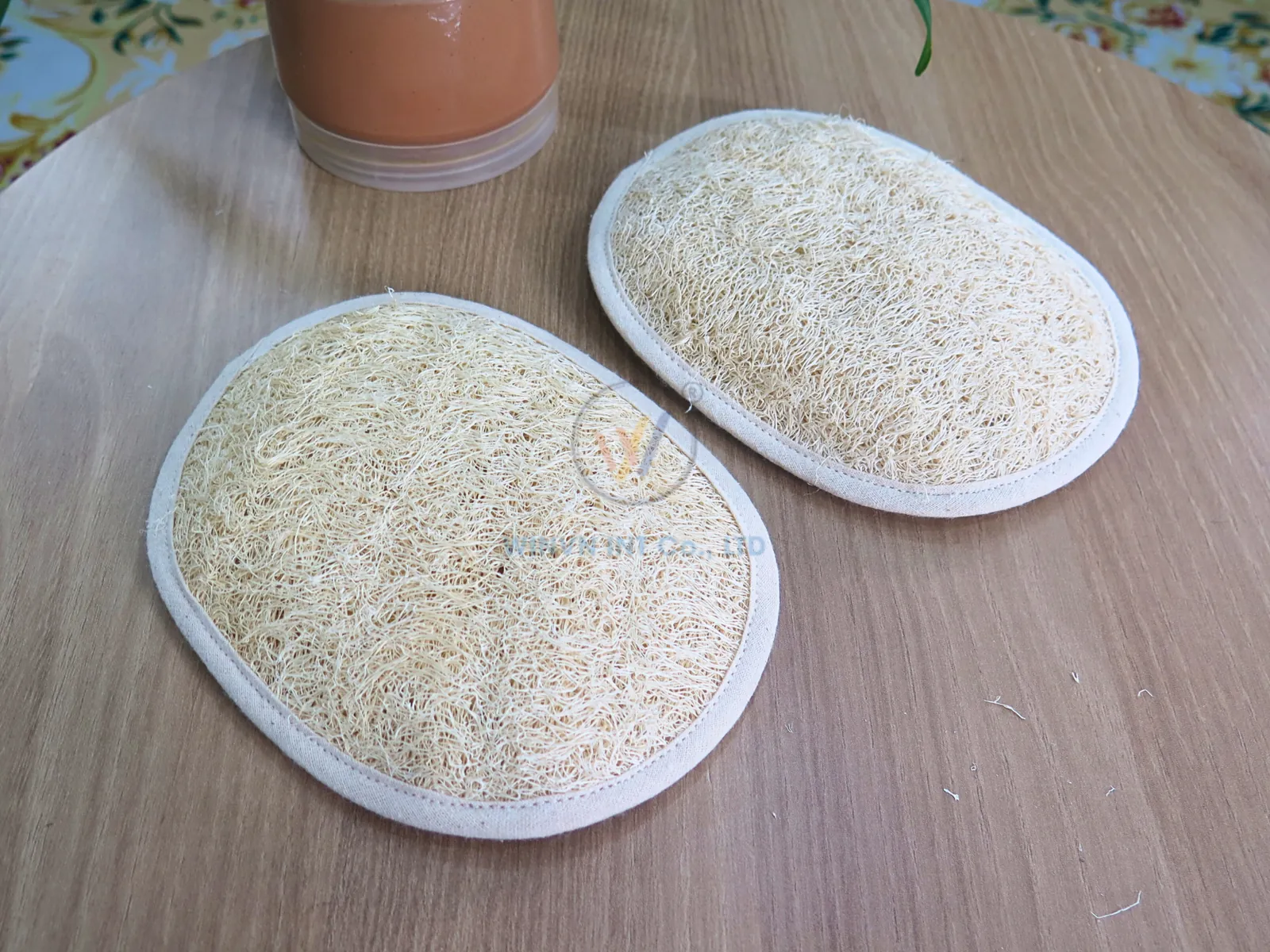
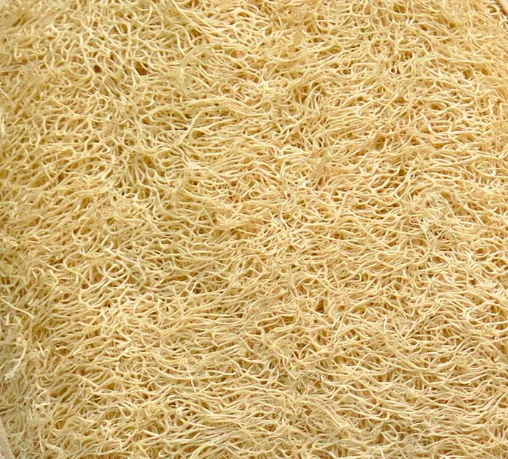
Natural loofah is the dried fibre skeleton of a mature Luffa aegyptiaca gourd, a climbing vine in the cucumber family. Once the fruit dries on the vine, the skin, pulp and seeds come out and what is left is a firm net of plant fibre. That net scrubs, drains and dries quickly, which is why it ends up as bath sponges, exfoliating pads and dish scrubbers. At the end of its life it can go in a compost pile.
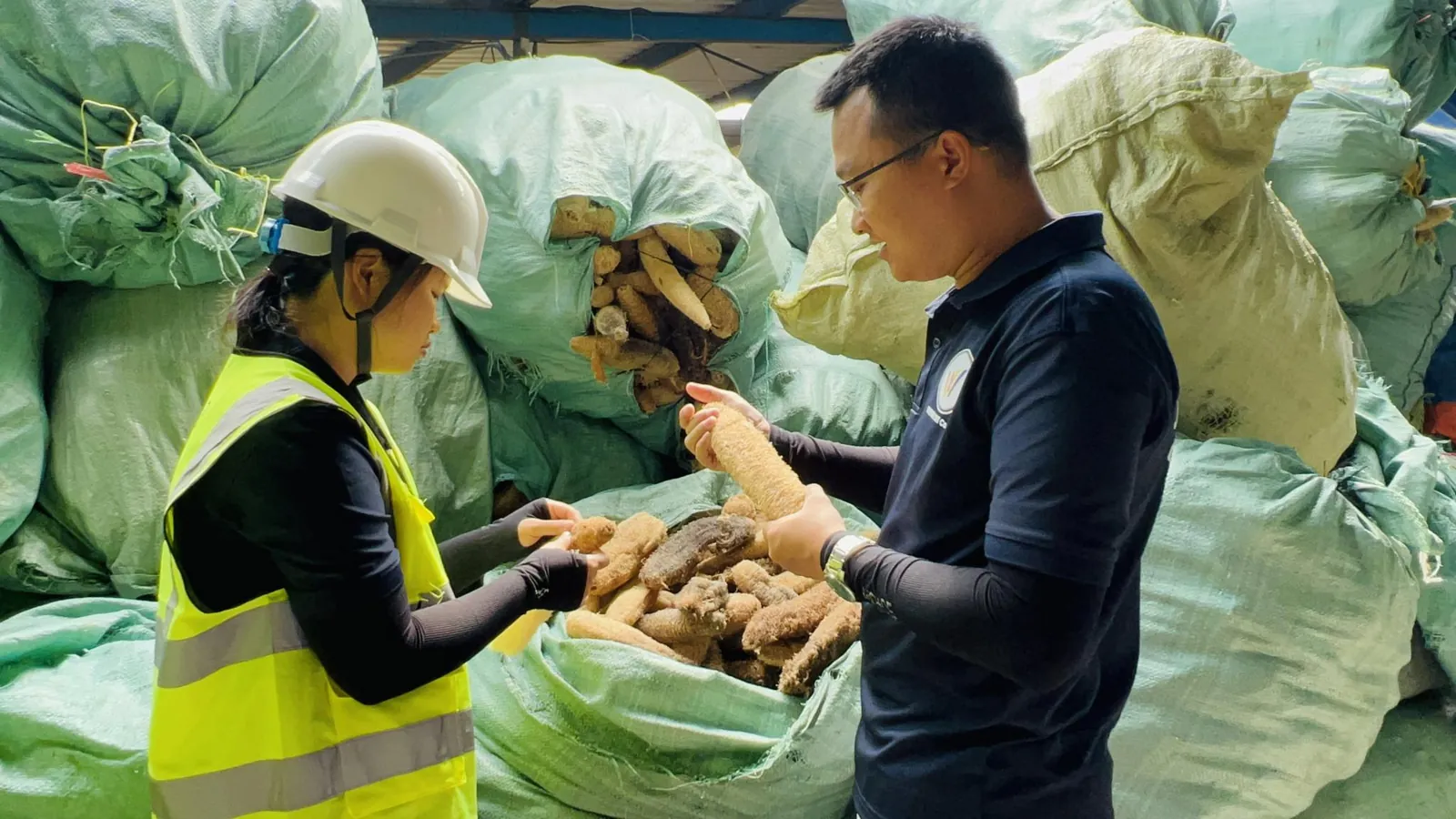
This guide is written for people who buy loofah to resell it: Amazon sellers, eco shops, hotel buyers and brands planning a private label line. It covers what the material is, how it gets from a vine to a finished product, what separates good loofah from poor loofah, and where it performs well or badly compared with the plastic products it replaces. We make loofah products in Vietnam, so where we describe the process, we are describing our own production floor.
What is natural loofah?
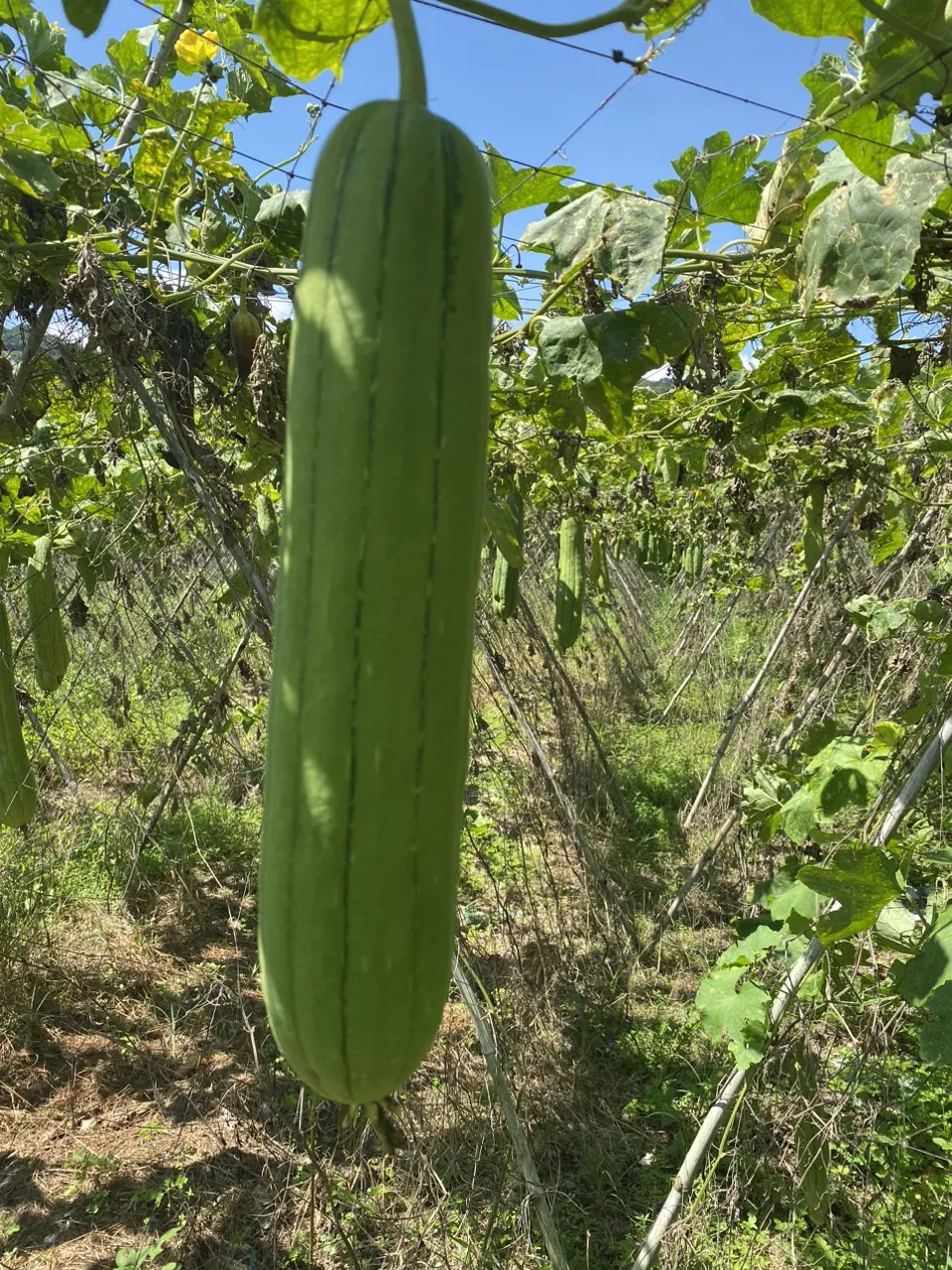
Natural loofah is a plant material, not a sea creature. It comes from the sponge gourd, Luffa aegyptiaca (older texts call it Luffa cylindrica), which grows as an annual vine in warm climates. The part we use is the fruit's internal vascular network: the fibres that carried water and nutrients while the gourd was growing.
The young fruit is a vegetable. In Vietnam it is called mướp and is cooked in soups while it is still soft and green. Only the fruit left on the vine until it turns brown, light and hollow-sounding becomes fibre. That is why loofah supply follows a harvest calendar rather than a factory schedule.
Buyers will meet the same material under different names depending on the market:
| Market | Common name | Typical search term |
|---|---|---|
| US, UK, Canada, Australia | Loofah, luffa | natural loofah sponge, loofah dish sponge |
| Germany | Luffa, Luffaschwamm | Luffa Spülschwamm, Luffaschwamm plastikfrei |
| France | Luffa, éponge végétale | éponge luffa, éponge végétale vaisselle |
| Japan | ヘチマ (hechima) | ヘチマたわし, ヘチマスポンジ |
| South Korea | 수세미 (susemi) | 천연 수세미 |
| Vietnam | Xơ mướp | xơ mướp rửa chén |
One naming problem matters for sellers. Many products listed as "loofah" in the US are nylon or polyethylene mesh poufs with no plant fibre in them at all. If you sell the real thing, your listing and packaging have to make that difference obvious. We cover how to tell them apart further down.
How loofah goes from vine to finished product
Every supplier describes the process a little differently, but the physical steps are the same. What changes between suppliers is how carefully each step is done. This is the sequence on our lines, with what each step should achieve.
- Let the fruit mature on the vine. Growers leave the gourd until the skin turns yellow-brown and the fruit feels light. Done when: the seeds rattle when the gourd is shaken. Harvesting early gives soft, thin fibre that falls apart in use.
- Peel and remove seeds. The dry skin is cracked and peeled by hand, and the seeds are shaken or tapped out. Done when: only the fibre network remains, with no pulp stuck inside.
- Wash and dry. The fibre is rinsed to remove sap and dust, then dried in sun and air. Done when: the fibre is dry through to the core, not just on the surface.
- Whiten with steam, if the order calls for it. We use steam only. No chlorine and no bleach. Done when: the colour is an even pale beige. Unwhitened loofah stays a darker tan, which some buyers prefer.
- Sort and grade. Workers sort by density, fibre thickness and colour. Done when: each batch contains pieces that feel and look alike, so a customer who reorders gets the same product.
- Cut, press and sew. Whole loofahs are opened, flattened and cut into pads, ovals and teardrops, then finished with sewn binding, backing or a hanging loop. Done when: edges are closed and loops are stitched through the fibre, not glued.
- Check moisture. Every batch is checked with a moisture meter before packing. Our limit is 12% or below. Done when: every checked piece reads under the limit. Our readings from one recent batch are published in our loofah hygiene guide.
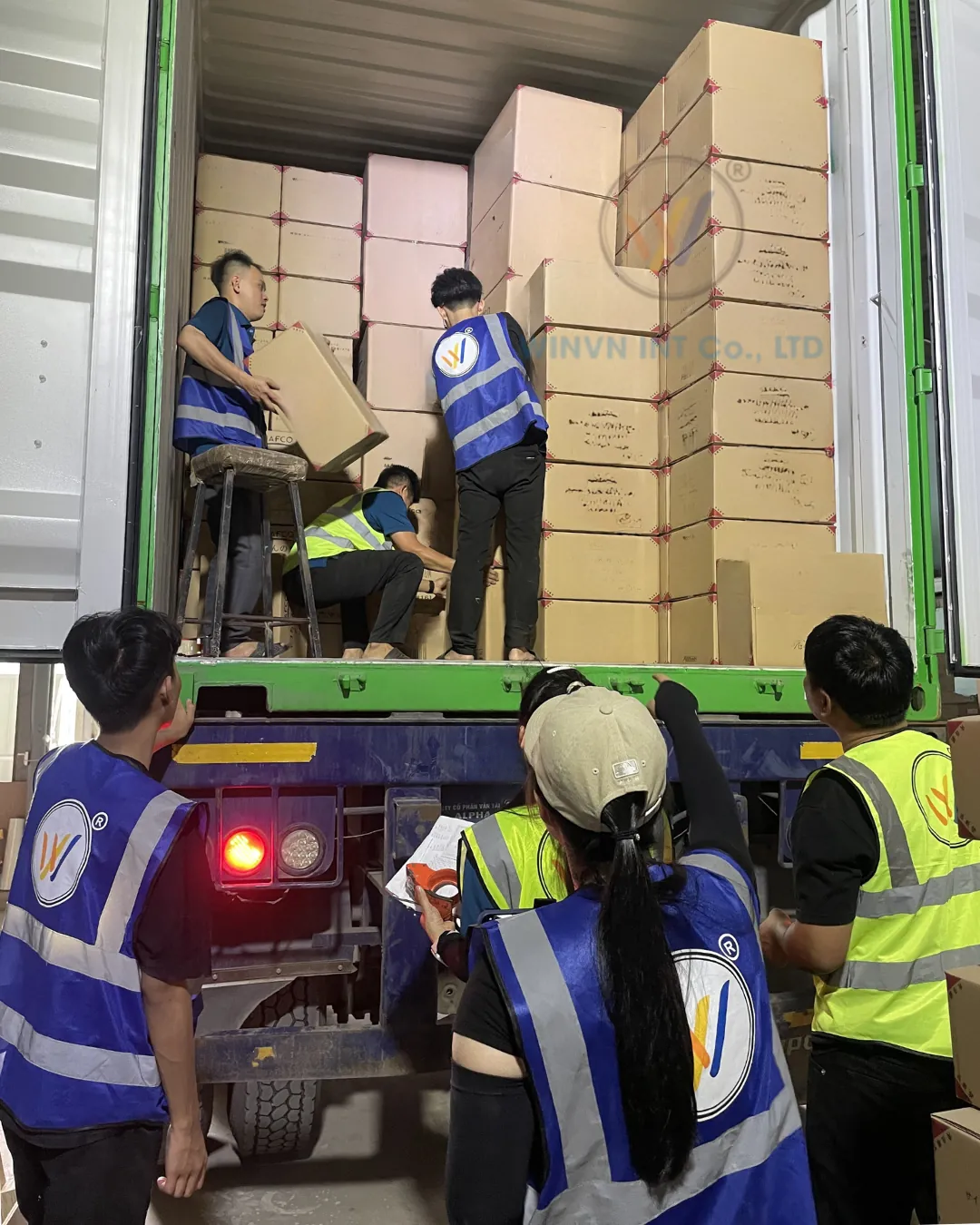
- Pack and ship. Pieces go into kraft sleeves, boxes or bulk cartons, often compressed to cut freight volume. Done when: cartons are sealed dry and labelled for the destination market.
What separates good loofah from poor loofah
Loofah is a natural material, so two pieces are never identical. The goal is not identical pieces. It is a narrow, predictable range. These are the factors that decide whether a product earns good reviews or returns.
| Factor | What to look for | What goes wrong if it is ignored |
|---|---|---|
| Maturity and density | Firm, springy fibre that holds its shape when squeezed | Pads flatten and shed fibres within days |
| Drying | Dry to the core before cutting and before packing | Musty smell on arrival, mould in the container |
| Moisture at packing | A stated limit (ours is 12% or below) and a way to check it | Batches that look fine at the factory and arrive spotted |
| Whitening method | Steam or no whitening; ask directly about chlorine | Chemical smell, weaker fibre, harder compliance story |
| Grading | Written grade definitions and matching photos | Mixed textures in one pack, "not as pictured" reviews |
| Finishing | Sewn edges, stitched cotton loops, no glue | Loops pulling out, edges unravelling |
| Components | All parts plant-based if you claim "plastic-free" | A polyester loop that makes the claim untrue |
If you only check one thing on a sample, check moisture and smell. Hold the piece to your nose straight out of the package. Clean loofah smells faintly of dry grass or nothing at all. A sour or earthy smell means the fibre was packed damp.
Natural loofah compared with other scrubbers
Customers rarely compare loofah with nothing. They compare it with the scrubber they already own. This table puts the common options side by side. Replacement intervals for bath use are from Cleveland Clinic's published guidance; the other cells describe the materials themselves.
| Scrubber | Material | Contains plastic | Dries after use | Suggested replacement | End of life |
|---|---|---|---|---|---|
| Natural loofah | Plant fibre (mostly cellulose) | No, if loops and binding are cotton | Quickly, open structure | Every 3–4 weeks for bath use | Plant fibre; remove non-fibre parts first |
| Mesh shower pouf | Nylon or polyethylene netting | Yes | Slowly, water trapped in folds | Up to 2 months | Landfill |
| Silicone scrubber | Synthetic silicone polymer | Synthetic polymer, not plant-based | Quickly, non-porous | Long-lasting; follow maker's guidance | Not compostable |
| Cellulose sponge | Regenerated wood cellulose, sometimes with cotton | Often none; some have a polyester scrub layer | Slowly, very absorbent | Follow maker's guidance | Compostable if no synthetic layer |
| Polyurethane kitchen sponge | Foam plus nylon or polyester scourer | Yes | Slowly | Frequent | Landfill |
A full side-by-side for kitchen use, including melamine "magic erasers", is in our kitchen sponge comparison.
Bath and body uses
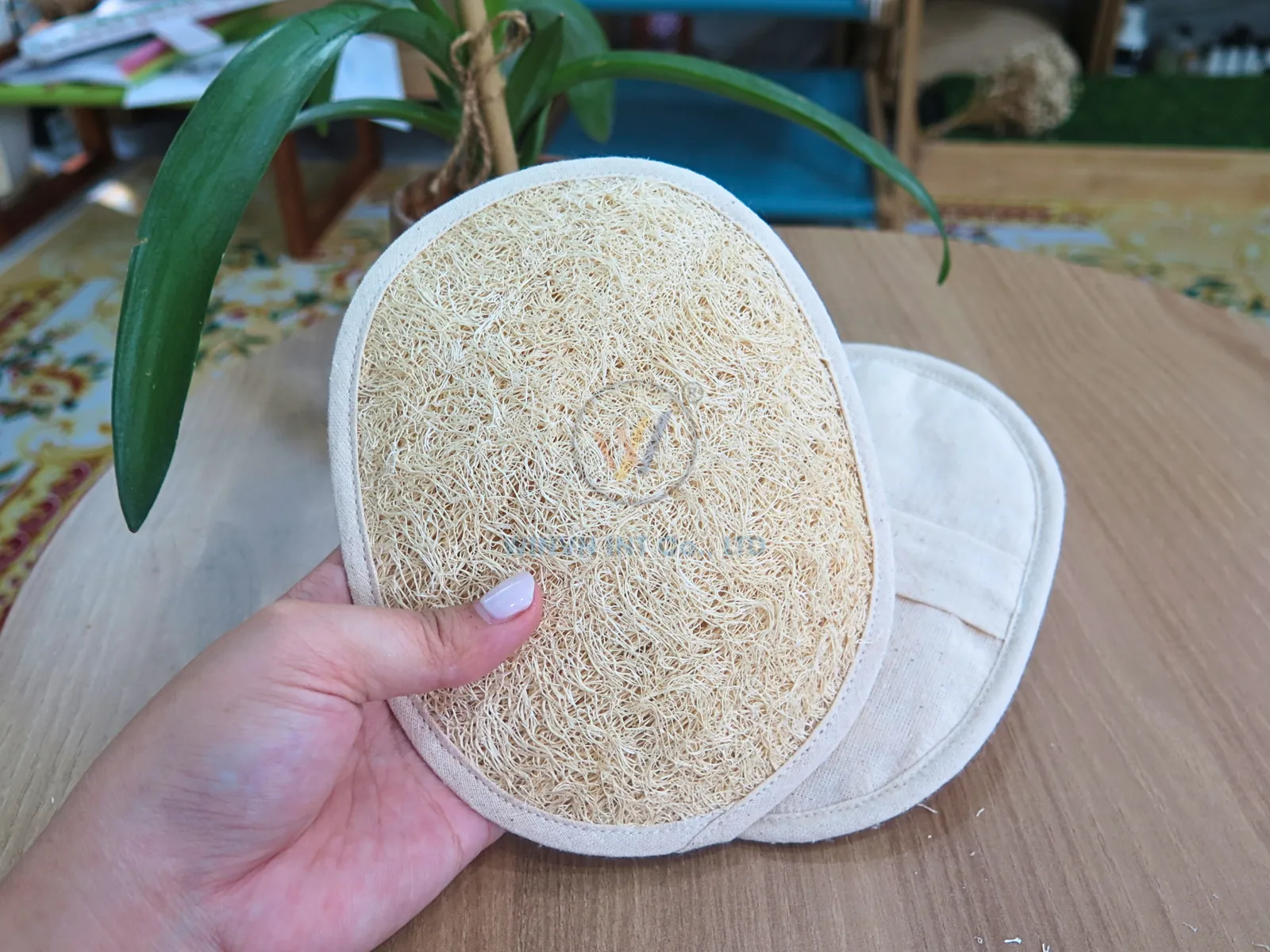
For the body, loofah works as a physical exfoliant. The fibre lifts dead skin and spreads soap into lather. It is stiff when dry and softens a lot once it is soaked, which surprises first-time users. Most bath products are flattened pieces sewn into shapes that are easier to hold than a whole gourd: gloves, oval pads with a hand strap, teardrops with a loop, back straps with handles.
Good fit if
- The customer wants body exfoliation without plastic
- They will hang it to dry outside the shower
- They are happy to replace it every few weeks
Not a good fit if
- It will be used on the face or on broken or freshly shaved skin
- It will stay in a wet shower caddy between uses
- Several people will share one piece
Relevant products: loofah bath glove, oval exfoliating scrubber, droplet bath sponge, back scrubber belt and wooden handle back brush.
Kitchen and household uses
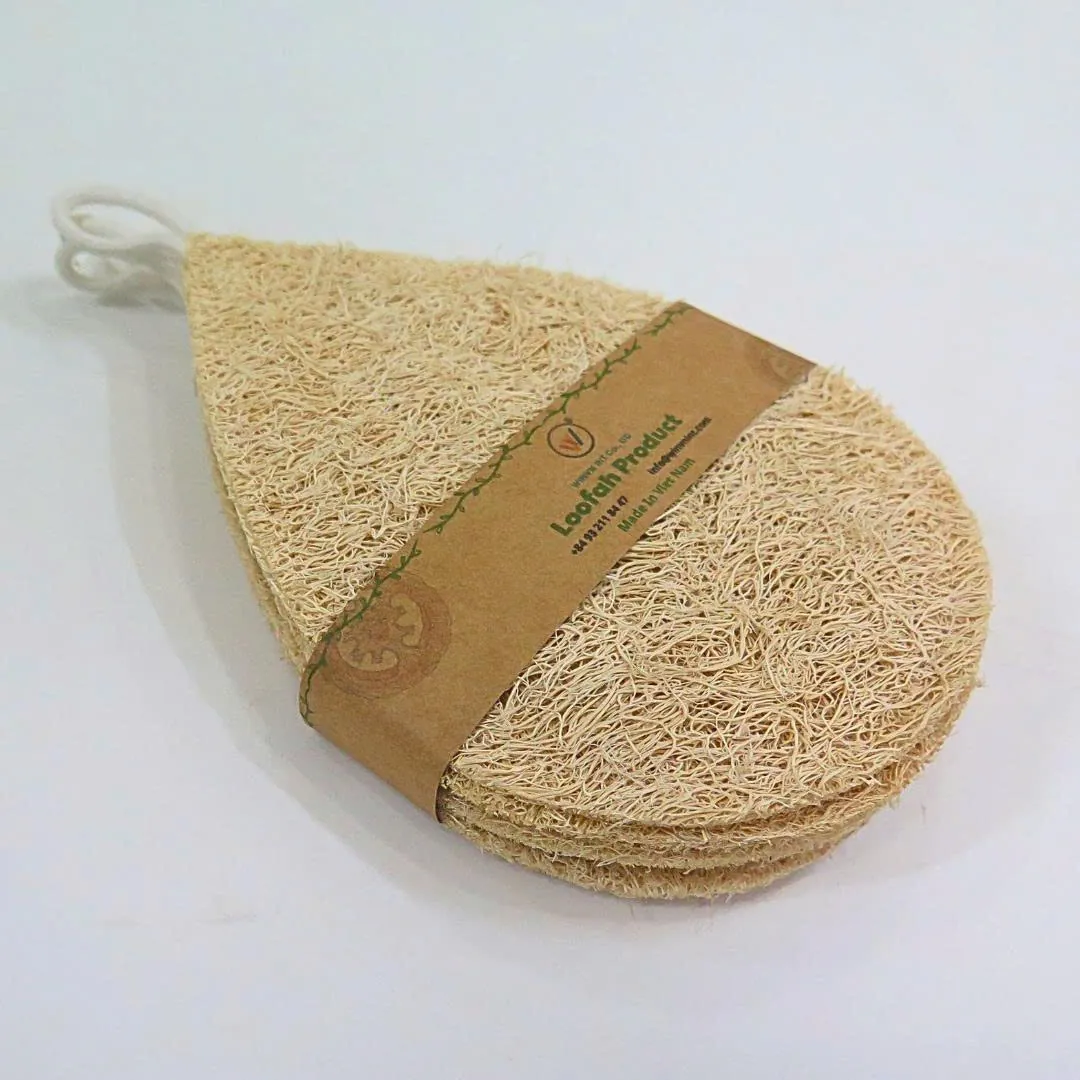
In the kitchen, a flat loofah pad replaces a foam sponge with a scouring layer. It removes food residue and grease from plates, glassware, non-stick pans and enamel pots, and it can scrub root vegetables. The Japanese site ELEMINIST, reviewing eco dish sponges, noted that hechima dries fast and that its fibres catch dirt so that most of it comes off with little or no detergent.
Good fit if
- Daily dishes, glasses, non-stick and enamel cookware
- The buyer wants a scrubber they can compost
- The sink area has room to hang or stand the pad to dry
Not a good fit if
- The main job is burnt-on carbon on steel pans (a coconut or steel brush does that better)
- The buyer expects a sponge that soaks up spills (cellulose is better at absorbing)
- The buyer wants one scrubber to last several months
Relevant products: teardrop dishwashing sponge and rectangular dishwashing sponge.
Is loofah sustainable?
Loofah has three clear environmental advantages over the plastic scrubbers it replaces. It is grown as an annual crop, it does not shed plastic particles because it contains none, and it can be composted at the end of its life. The case against plastic sponges got stronger in 2026, when two studies measured microplastic release from kitchen sponges and melamine foam. We summarise both in our article on kitchen sponge microplastics.
It is not impact-free. Loofah is grown in tropical and subtropical regions and shipped long distances to most of its buyers. It needs replacing more often than silicone. And one of the 2026 studies found that water use, not the sponge, is the largest part of the footprint of washing dishes by hand. A fair summary is this: loofah removes the plastic from the product, but the product is still consumed and replaced. See how to compost a loofah properly.
The market in 2026
Future Market Insights values the loofah bath sponge market at about USD 0.7 billion in 2026 and projects USD 1.1 billion by 2036, a compound annual growth rate of 5.0%. In its segmentation, natural loofah holds 54% of the category, e-commerce accounts for 39% of sales, and household buyers make up 82% of end use, with spas and salons at 18%. The firm projects growth of 4.4% a year in the United States, 4.3% in the United Kingdom, 4.1% in Germany and 3.7% in Japan.
These are steady numbers, not boom numbers. What keeps the category attractive for resellers is the replacement cycle. A customer who likes the product buys it again every few weeks. The same report flags the risks we see in practice: natural texture varies, which hurts repeat purchase online, and moisture damage shortens product life.
Public interest in plastic-free swaps is broad. The Plastic Free Foundation reports that at least 174 million people in 190 countries took part in Plastic Free July in 2025, and 86% of participants said their changes became lasting habits.
How retailers and brands source loofah
There are two ways to buy. You can buy finished products, already cut, sewn and packed, which suits Amazon sellers, eco shops and hotels. Or you can buy raw or semi-finished loofah and convert it yourself, which suits manufacturers with their own sewing capacity. Most buyers who are new to the category should start with finished goods.
- Order samples before anything else. Done when: you have held, wetted, used and dried the actual pieces for at least a week.
- Write the specification down. Size, shape, density grade, colour, moisture limit, components, packaging. Done when: the supplier confirms each line in writing.
- Agree on documents. Commercial invoice, packing list, material declaration, certificate of origin, and phytosanitary papers where your market requires them. Done when: your customs broker has confirmed the list for your country.
- Start small. Our minimum order is 100 pieces per SKU, which lets you test a listing or a shelf before committing to volume. Done when: sell-through and reviews justify a larger order.
For the numbers side of sourcing, read our wholesale price guide. For vetting suppliers, use the 8-point supplier checklist. If you sell on Amazon, the private label FBA guide covers packaging and fees.
Sources
- Future Market Insights – Loofah Bath Sponge Market (2026)
- Cleveland Clinic – Why loofahs can be bad and alternatives to try
- ELEMINIST – 13 eco-friendly dish sponges (Japanese)
- Plastic Free Foundation – 2025 Impact Report
- ScienceDaily – Your kitchen sponge is releasing microplastics (University of Bonn, June 2026)
- ScienceDaily – Melamine sponges release trillions of microplastic fibers (ACS, April 2026)
Frequently asked
Is loofah a plant or a sea sponge?
Loofah is a plant. It is the dried fibre skeleton of the mature fruit of Luffa aegyptiaca, a climbing vine in the cucumber family. Sea sponges are animals and are a different product.
Why are some loofahs white and others brown?
Colour depends on the variety, how the fruit dried on the vine and whether it was whitened. Unwhitened loofah is tan. Whitened loofah is pale beige. We whiten with steam only, never chlorine or bleach.
How can I tell real loofah from a plastic pouf?
Real loofah is a stiff, irregular web of beige fibres that softens in water. A pouf is soft, often coloured, made of a regular plastic mesh and does not change much when wet.
Where is most natural loofah produced?
Loofah grows in warm regions. Vietnam, China, Egypt and India are among the main producing and exporting countries. We source from farmers in Central Vietnam.
Is natural loofah sustainable?
It is an annual crop, contains no plastic and can be home composted. It still has a footprint from farming, processing and shipping, and it needs replacing more often than silicone.
What is the minimum order for loofah products?
Our minimum is 100 pieces per SKU, and samples are available before any bulk order.
Written from our own production and export experience. General information, not legal or compliance advice; confirm requirements for your market with your own advisor.